Popeyes Employee Credit Card Theft: What Customers Must Know

Imagine enjoying a quick meal at your favorite fast-food outlet—and days later, unexplained charges appear on your credit card. For a growing number of consumers, this unsettling experience has raised serious concerns around Popeyes employee credit card theft and payment security in fast-food restaurants.
While most Popeyes employees are honest and hardworking, isolated incidents reported by customers across online forums, consumer complaint portals, and local news outlets highlight a critical issue: how vulnerable card data can be during everyday transactions.
This article explores what Popeyes employee credit card theft allegations mean, how such incidents typically happen, what customers can do to protect themselves, and how businesses can improve trust and payment security. The goal is awareness—not fear—backed by data, expert insights, and practical solutions.
1. What Is Popeyes Employee Credit Card Theft?
Popeyes employee credit card theft refers to situations where customers allege unauthorized use or misuse of their card details after making a purchase at a Popeyes restaurant.
This can include:
- Unauthorized charges appearing days or weeks later
- Card details allegedly copied or photographed
- Suspicious transactions linked to locations unrelated to the customer
⚠️ Important note:
These cases do not imply that Popeyes as a brand supports or tolerates theft. Like any large franchise system, Popeyes operates thousands of locations, often with independently managed staff.
2. Why Credit Card Theft Happens in Fast-Food Chains
Fast-food restaurants are high-volume, fast-paced environments. According to a 2023 report by the Federal Trade Commission (FTC), food service establishments are among the top five locations where consumers suspect card data exposure.
Key contributing factors:
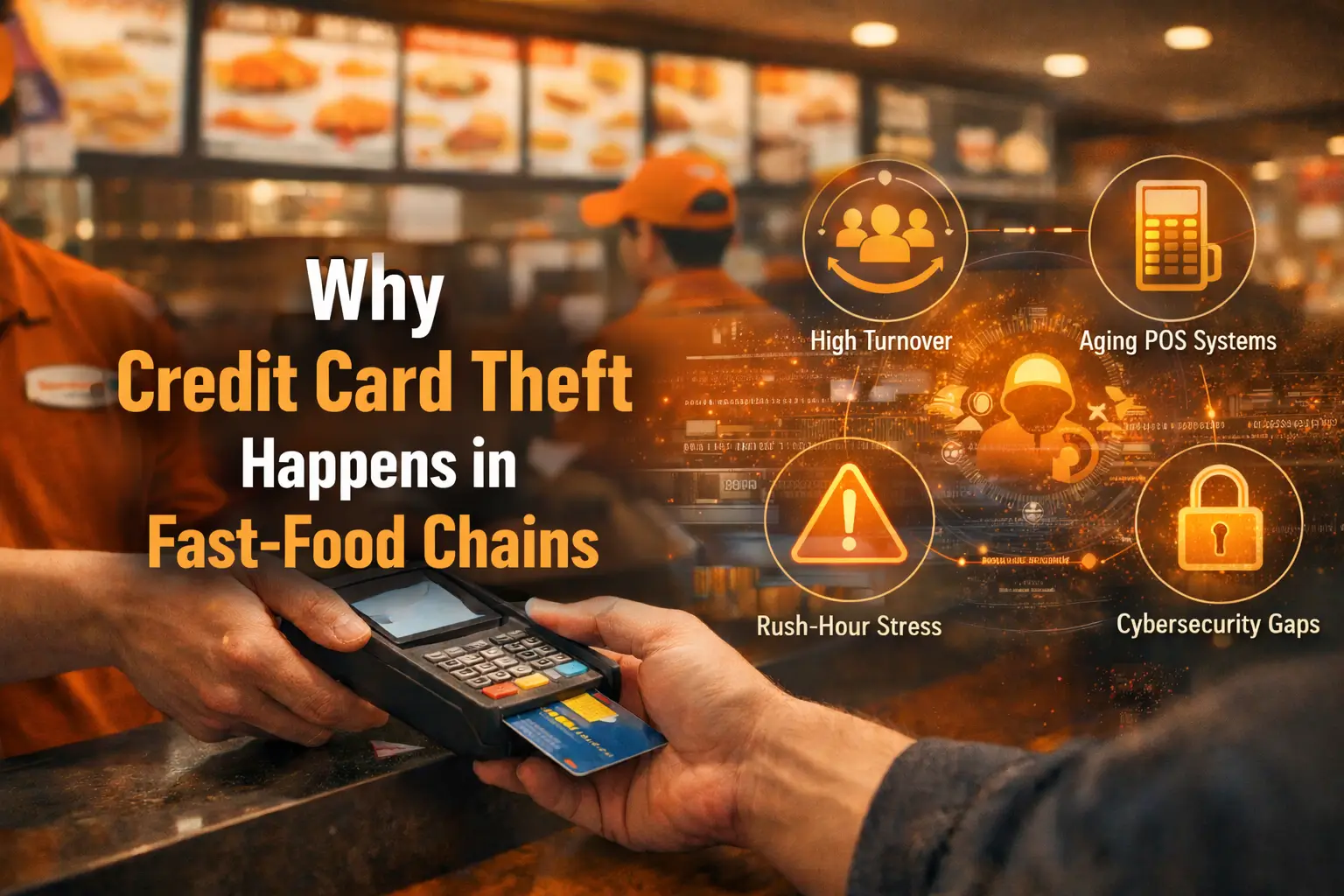
- High employee turnover
- Manual card handling
- Older POS (Point-of-Sale) systems
- Lack of cybersecurity training
- Rush-hour pressure reducing oversight
The issue is not exclusive to Popeyes—it affects the entire fast-food industry.
3. Reported Cases and Consumer Complaints Explained
A review of publicly available complaints on platforms like:
- Better Business Bureau (BBB)
- Consumer Financial Protection Bureau (CFPB)
- Reddit consumer forums
shows occasional reports where customers noticed fraudulent charges shortly after dining at Popeyes.
Common complaint patterns:
| Pattern | Description |
|---|---|
| Timing | Fraud within 3–14 days |
| Amounts | Small test charges first |
| Merchants | Online stores or gas stations |
| Resolution | Most refunded by banks |
📊 According to CFPB data, over 90% of reported card fraud victims receive full reimbursement when reported promptly.
4. How Card Information Can Be Stolen at Restaurants
Understanding the mechanics helps reduce panic and increase prevention.
Common methods used in restaurant-related card fraud:
- Card skimming using illegal devices
- Manual copying of card numbers
- Photographing cards with smartphones
- Compromised POS systems
- Receipt data exposure
Notably, many fraud cases stem from data breaches upstream, not direct employee action.
5. Signs Your Credit Card Data May Be Compromised
Watch for these red flags after dining out:
- Unrecognized micro-transactions
- Charges from unfamiliar merchants
- Declined transactions due to suspected fraud
- Alerts from your bank
- Online account password reset emails
⏱️ Early detection is crucial. Banks recommend checking statements daily.
6. What to Do If You Suspect Credit Card Theft
If you believe your card details were misused after visiting Popeyes:
Immediate steps:
- Contact your bank or card issuer
- Freeze or cancel the card
- Dispute fraudulent transactions
- Change online banking passwords
- File a complaint with CFPB or FTC
🔗 Trusted resources:
- FTC Identity Theft: identitytheft.gov
- CFPB Complaint Portal: consumerfinance.gov
7. Popeyes’ Official Policies on Payment Security
Popeyes Louisiana Kitchen, Inc. publicly states its commitment to PCI-DSS compliance, a global standard for card security.
Reported safeguards include:
- Encrypted POS systems
- Limited employee access
- Regular audits
- Mandatory compliance training
Franchise owners are contractually required to follow these standards.
8. Legal Consequences for Credit Card Theft
Credit card theft is a serious criminal offense.
Potential legal consequences:
- Felony charges
- Prison sentences (up to 20 years in the U.S.)
- Heavy fines
- Permanent criminal records
Under 18 U.S. Code § 1029, misuse of access devices carries severe penalties.
9. How Restaurants Prevent Employee Credit Card Fraud
Modern restaurants use layered defenses:
- EMV chip readers
- Tap-to-pay systems
- CCTV monitoring
- Transaction monitoring software
- Background checks
According to Visa, EMV adoption reduced in-store fraud by over 80% since 2015.
10. Tips to Protect Your Card at Popeyes and Elsewhere
Smart consumer habits:
- Use contactless payments
- Never hand over your card unnecessarily
- Avoid public Wi-Fi for banking
- Enable instant transaction alerts
- Use virtual cards for small purchases
💡 Digital wallets like Apple Pay and Google Pay tokenize card data, making theft far harder.
11. Digital Payments vs Physical Cards: Which Is Safer?
| Method | Risk Level |
|---|---|
| Chip Card | Medium |
| Swipe Card | High |
| Contactless | Low |
| Mobile Wallet | Very Low |
Tokenization ensures real card numbers are never exposed.
12. Role of Banks and Card Networks in Fraud Protection
Major networks like Visa, Mastercard, and AmEx provide:
- Zero liability policies
- AI-based fraud detection
- Instant card lock features
According to Mastercard, AI prevents $20 billion+ in fraud annually.
13. Consumer Rights Under U.S. and Global Law
Under the Fair Credit Billing Act (FCBA):
- Maximum liability: $50
- Often waived entirely
- Timely reporting required
Many countries offer similar protections through banking regulations.
14. Expert Opinions on Restaurant Payment Security
“Most card fraud today is preventable with contactless payments and real-time alerts.”
— Cybersecurity Analyst, SANS Institute
“Consumers should not fear dining out—but they should stay vigilant.”
— FTC Consumer Protection Advisor
15. Lessons for Fast-Food Chains and Customers
For businesses:
- Upgrade POS systems
- Train staff regularly
- Enforce strict access controls
For customers:
- Monitor accounts
- Prefer digital payments
- Report suspicious activity early
Trust is built through transparency and technology.
16. Conclusion & Key Takeaways
The issue of Popeyes employee credit card theft is best understood as a consumer awareness topic, not a widespread or systemic failure. While isolated incidents and allegations exist—as they do in every large retail system—modern fraud protections heavily favor consumers.
By staying informed, using secure payment methods, and acting quickly, customers can dine confidently without fear. At the same time, continued improvements in payment security help brands like Popeyes maintain trust and accountability.
👉 Stay alert. Use digital payments. Protect your financial identity.
17. FAQs
Q1. Is Popeyes employee credit card theft common?
No. Reported cases are rare and not indicative of systemic issues.
Q2. Can Popeyes employees see my full card number?
Modern POS systems limit employee access to full card details.
Q3. Will my bank refund fraudulent charges?
In most cases, yes—especially if reported quickly.
Q4. Are contactless payments safer at Popeyes?
Yes. They use tokenization and reduce exposure risk.
Q5. Where should I report suspected card theft?
Your bank, the FTC, and consumer protection agencies.