First Digital Credit Card: Complete Guide to Features, Benefits & How to Apply
If you've been offered the First Digital Mastercard® because your credit is thin, damaged, or both, the pitch sounds appealing on the surface: no security deposit, decent odds of approval, and monthly reporting to all three credit bureaus. But the fee structure behind that "no deposit" convenience is where this card gets complicated — and where most reviews either bury the details or don't fully explain why the fees exist in the first place.
This guide breaks down exactly what the First Digital Card costs, how it works, who issues and services it, and when a secured card is the smarter move instead.
What Is the First Digital Credit Card?
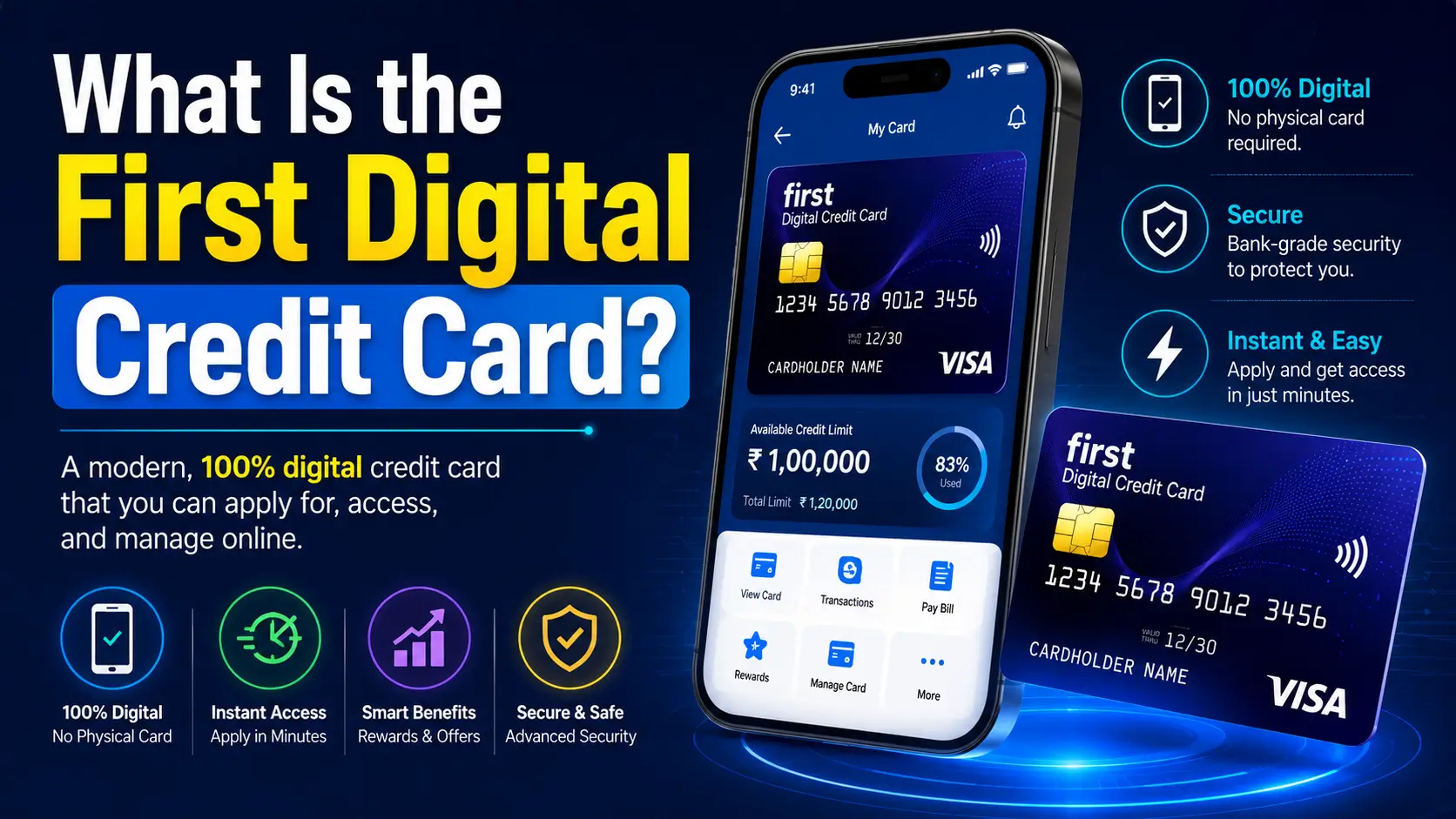
The First Digital Mastercard® is an unsecured credit card marketed to people with poor, limited, or no credit history. "Unsecured" is the operative word — unlike a secured card, you don't put down a cash deposit to open the account. Instead, the issuer recoups that risk through a stack of upfront and ongoing fees rather than tying up your money.
Two entities are involved, and it's worth knowing the difference:
- Synovus Bank is the issuer — the FDIC-member bank that technically extends the credit and reports the account to the credit bureaus.
- First Digital (the brand on the card, previously associated with First Latitude) handles servicing — billing, the mobile app, customer support, and day-to-day account management.
That issuer/servicer split matters if you ever need to escalate a dispute: servicing complaints go through First Digital's support line, but reconsideration after a denial typically routes through Synovus Bank directly.
Key Features
| Feature | Details |
|---|---|
| Card network | Mastercard — accepted anywhere Mastercard is accepted in the US |
| Starting credit limit | $300 (before fees are deducted) |
| Security deposit | None required (unsecured) |
| Rewards | 1% cash back on payments made |
| Credit bureau reporting | Reports monthly to Equifax, Experian, and TransUnion |
| Mobile app | iOS and Android app for payments, statements, and balance checks |
| Purchase protection | Mastercard Zero Liability and ID theft protection |
| Bill pay by money order | Yes — useful if you don't want to route payments through a bank account |
The money-order payment option is a genuine differentiator worth flagging: most competitor roundups mention it in passing, but it's one of the only practical paths for someone managing this card without a traditional checking account for payments — even though, notably, having a checking account is still required just to apply.
The Fee Breakdown (Read This Before Anything Else)
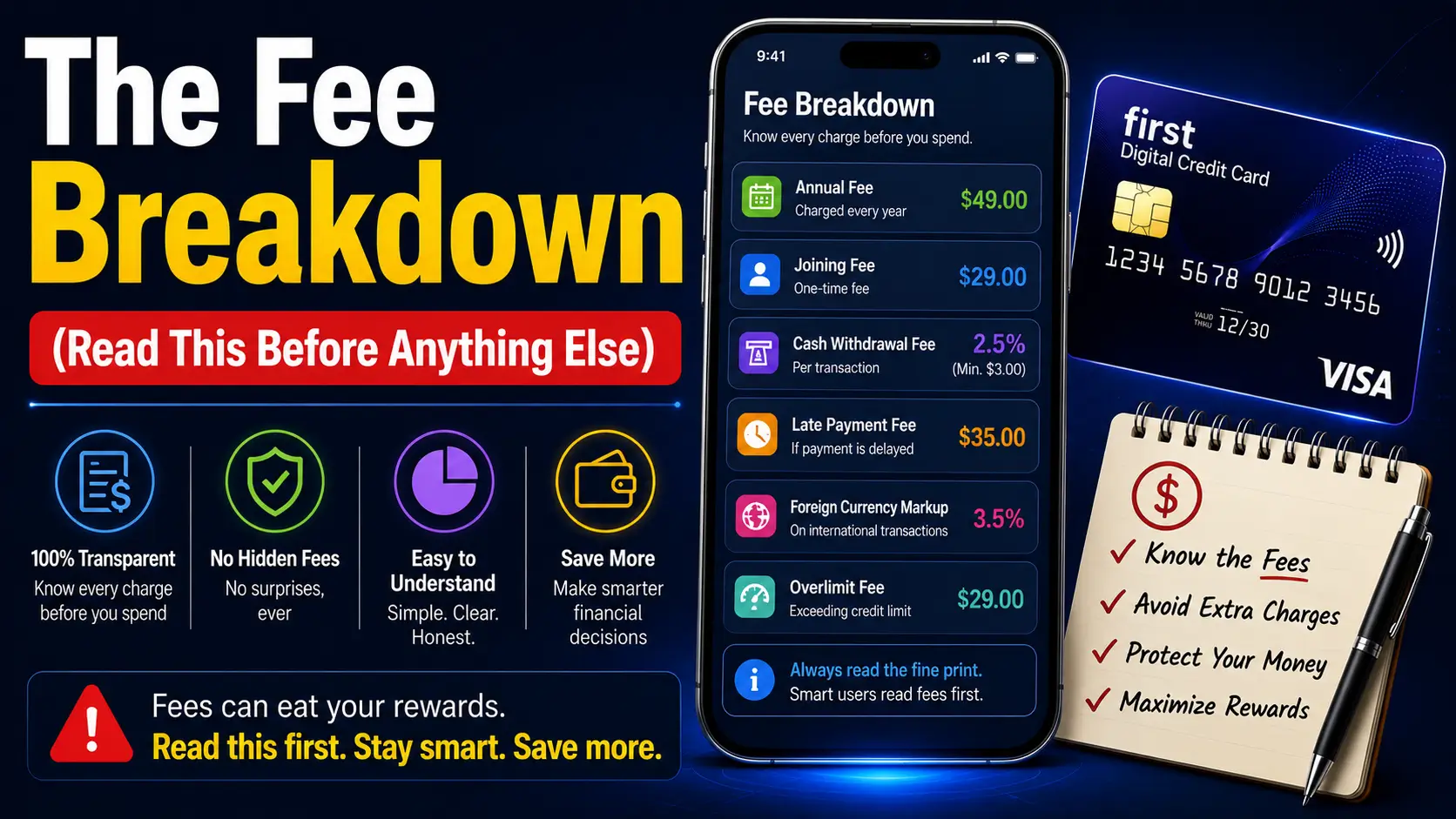
This is the part that determines whether the card makes sense for you, and it's also where published figures vary by source and by application date — treat the numbers below as representative, then confirm current terms on First Digital's own pricing page before applying.
- One-time program fee: roughly $95, charged before the account is activated
- First-year annual fee: reported anywhere from about $50 to $125 depending on the offer and source
- Ongoing annual/monthly fee: around $48 per year from the second year on (often billed as a monthly servicing charge)
- Late payment fee: up to $41
- Expedited phone payment fee: around $10 if you pay by phone and want it processed same-day
- Credit limit increase fee: reportedly 25% of the increase amount if you request and are approved for one
- Additional authorized user fee: roughly $20 per user
Stack the program fee and first-year annual fee together, and it's common for a large chunk of that initial $300 limit to be gone before you make a single purchase. That's the mechanical trade-off of skipping a deposit: the bank still needs to price in default risk, and without collateral, fees are the only lever available.
APR: Why It's So High
The First Digital Mastercard carries a variable APR that recent sources put at roughly 35.99% — nearly double the average card APR tracked by the Federal Reserve for accounts that carry a balance (around 22.8% as of late 2024). If you pay your statement balance in full every month, the APR is close to irrelevant. If you carry a balance, even briefly, the interest cost compounds quickly on top of the fees above.
Eligibility Requirements
To apply, you'll generally need to:
- Be a US resident and at least 18 years old
- Have an active checking account (or be willing to open one) — this is a hard requirement for approval, even though bill payment itself can be done by money order afterward
- Submit to a hard credit inquiry — First Digital does not offer a soft-pull prequalification step, so applying will show up on your credit report and can cause a small, temporary score dip regardless of outcome
How to Apply
- Complete the online application on First Digital's website — applications aren't accepted by phone.
- Provide your personal and financial details, including Social Security number, address, income, and checking account information.
- Submit and wait for a decision. Approval decisions are often returned quickly, but some applications take longer to process.
- Card issuance and setup, if approved, can reportedly take up to a few weeks before the physical card and account access arrive.
- Pay the program fee before the account activates, then watch for your first statement to confirm your effective starting credit limit after fees.
If you're denied, Synovus Bank typically sends a letter explaining the reason. Common denial reasons include insufficient income relative to existing debt, an unresolved bankruptcy on file, or being under 18. Reconsideration requests go through Synovus Bank, not First Digital's servicing line.
First Digital vs. Secured Card Alternatives
This is the comparison most reviews skip past too quickly. A secured card requires cash up front, but that deposit is refundable and typically results in a lower total cost over the first year — because the deposit is your credit line, rather than a separate expense stacked on top of it.
| First Digital Mastercard | Typical Secured Card (e.g., OpenSky, Discover it Secured) | |
|---|---|---|
| Deposit required | None | Usually $200+ |
| Program/activation fee | ~$95 | Usually $0 |
| Annual fee | ~$50–$125 (1st year), ~$48/yr after | Often $0–$35 |
| APR | ~35.99% | Often mid-20% range |
| Deposit refundable? | N/A (no deposit) | Yes, on account closure in good standing |
| Prequalification available? | No | Sometimes (e.g., OpenSky) |
If you have even $200 available to set aside temporarily, a secured card is very likely to cost less over 12 months and return your money later. The First Digital card exists for the specific case where you have no deposit money available at all and need a Mastercard-network option that reports to the bureaus.
Pros and Cons
Pros:
- No security deposit required
- Reports to all three major credit bureaus monthly
- 1% cash back on payments, which most subprime unsecured cards don't offer
- Can pay by money order if you prefer not to link a bank account for billing
- Works nationwide anywhere Mastercard is accepted
Cons:
- High combined fees can consume a large share of the initial $300 limit
- APR near 36% makes carrying a balance expensive
- No prequalification — every application is a hard pull
- Requires an active checking account just to apply
- Customer service and payment-processing complaints appear frequently in user reviews
Is the First Digital Credit Card Worth It?
For most people who can scrape together a $200–$300 deposit, a secured card will build credit just as effectively at a lower total cost, with the deposit returned later. The First Digital card earns its place specifically for applicants who have no deposit funds available and need bureau reporting on a usable Mastercard now, understanding the fee trade-off going in.
If you go this route, the way to make it work is to treat the $300 limit as much smaller in practice — budget as if your usable credit is closer to $150–$200 once fees are deducted — and pay in full every cycle to avoid the 36% APR compounding on top of everything else.
What Cardholders Say
Independent reviews on platforms like Trustpilot and Reddit are mixed. Positive accounts tend to cite fast approval and measurable score improvements after several months of on-time payments. Negative accounts frequently mention slow payment processing (particularly for debit card payments), difficulty reaching helpful customer service, and frustration over the size of the fees relative to the credit extended. If you're considering the card, weigh both sides rather than relying on either extreme.
Frequently Asked Questions (FAQs)
Is the First Digital Mastercard legit?
Yes. It's issued by Synovus Bank, an FDIC-member institution, and reports account activity to all three major credit bureaus monthly.
Does applying hurt my credit score?
It can cause a small, temporary dip, since First Digital requires a hard credit inquiry with no prequalification option.
Can I use the card for online purchases and everyday spending?
Yes, it works anywhere Mastercard is accepted, though some cardholders report chip/contactless reliability issues at certain terminals — something to test cautiously after activation.
How long does approval and card delivery take?
Decisions can come back quickly, but receiving the physical card and full account access has been reported to take up to a few weeks after approval.
Is a secured card better than the First Digital card?
For most applicants who can afford a refundable deposit, yes — secured cards typically cost less over the first year and return the deposit when the account closes in good standing.
Can I increase my credit limit later?
Some cardholders are offered limit increases after 12 months of on-time payments, though a fee (reportedly around 25% of the increase) may apply — confirm current terms before requesting one.
Bottom Line
The First Digital Mastercard is a workable, if expensive, option for rebuilding credit when a deposit isn't an option. Go in knowing the real math: fees will eat into your starting limit, the APR punishes any carried balance, and a secured card is almost always cheaper if you can manage the deposit. Used deliberately — paid in full, every month — it can still do the one job that matters: reporting positive payment history to the bureaus that decide your next card.