River Valley Loans Scam or Legit? Reviews, Rates & Complaints Explained
If you've landed here after seeing a River Valley Loans offer — or after opening a loan agreement and doing a double-take at the interest rate — you're asking the right question. The short answer: River Valley Loans is a real, operating lender, not an identity-theft scam. But "not a scam" and "safe to borrow from" are two very different things, and the data on this lender points hard toward the second one being false for most borrowers.
Here's the full picture, based on the lender's own loan documents, its Better Business Bureau file, hundreds of third-party consumer reviews, and state regulatory warnings.
Quick Answer: Is River Valley Loans Legit or a Scam?
River Valley Loans is legitimate in the sense that it's a real, funded lender that will deposit money into your account and expects you to repay it under a real contract. It is not a phishing operation or a fake-loan-fee scam.
What makes people ask the "scam" question is the business model: River Valley Loans operates as a tribal lending entity, which lets it charge annual percentage rates of roughly 450% to over 700% — rates that would be illegal under nearly every state's usury cap. Combine that with an F rating from the BBB and a pattern of complaints about undisclosed rates, and it's easy to see why "legit" doesn't feel like the right word either. Think of it less as a scam and more as a legal loophole product: real, enforceable, and extremely expensive.
What Is River Valley Loans?
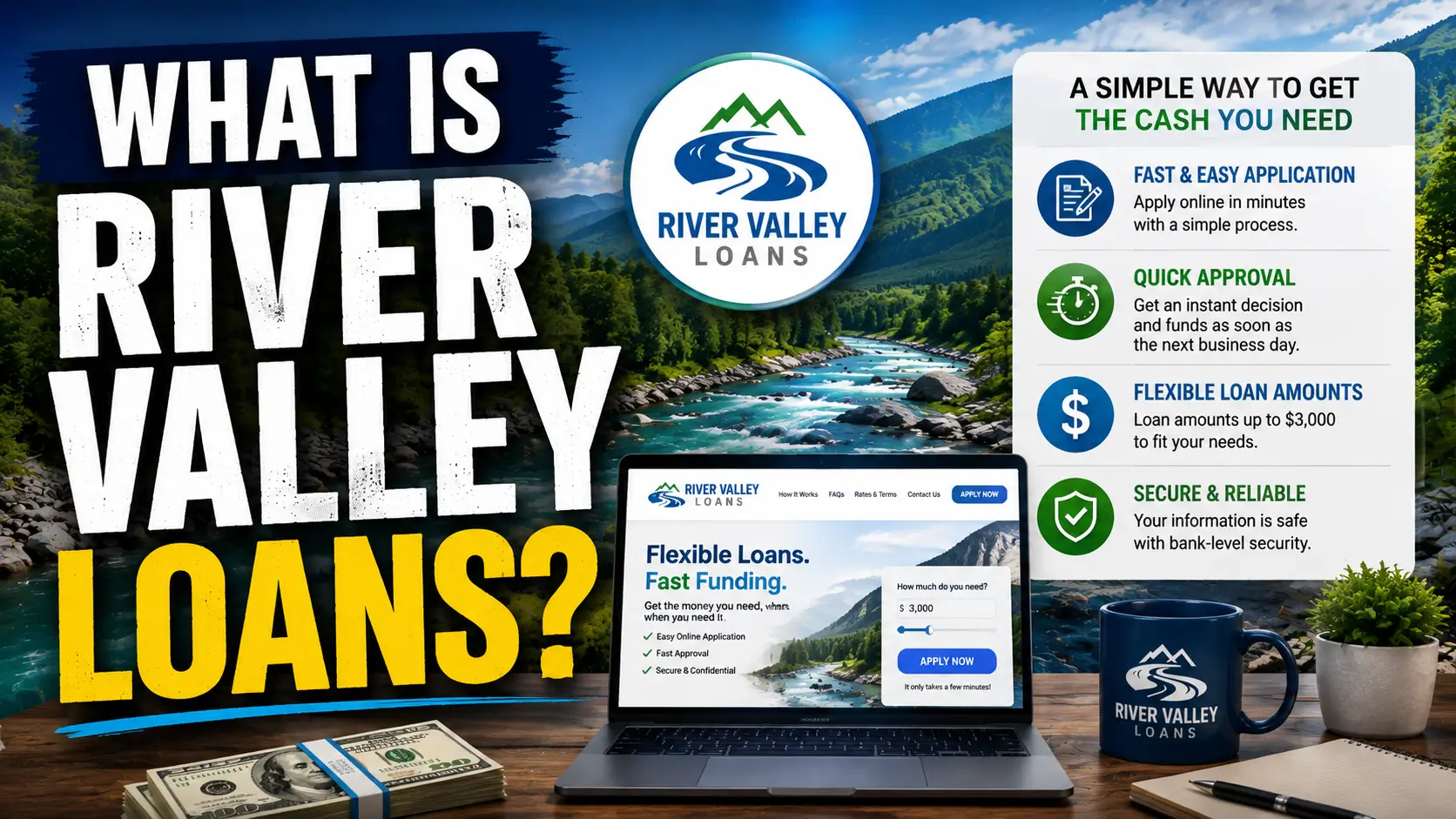
River Valley Loans (rivervalleyloans.com) offers short-term installment loans, typically between $300 and $3,000, aimed at borrowers with poor or no credit who can't qualify with a bank or credit union. First-time customers are generally capped around $1,000; returning customers in good standing can be offered larger amounts. Repayment terms usually run in the 10-to-18-month range with bi-weekly or monthly payments.
The pitch is speed and accessibility: an online application, a same-or-next-business-day funding window, and no hard credit pull that would tank your score. For someone facing a car repair or utility shutoff with no other options, that's genuinely appealing. The cost of that convenience is where the real story is.
Who Actually Owns River Valley Loans?
River Valley Loans is a "doing business as" name for Wahido Lending, which is wholly owned by the Dakota Economic Development Corporation (DEDC) — an economic arm of the Crow Creek Sioux Tribe, a federally recognized sovereign tribe based in Fort Thompson, South Dakota. The tribe also operates related lending brands, including Buffalo Lake Lending and RiseUp Lending, out of the same P.O. boxes in Fort Thompson.
This ownership structure isn't a red flag by itself — tribal economic development arms are a legitimate and common source of jobs and revenue for tribes. But it's the mechanism that makes the next section possible.
Why Tribal Lenders Can Legally Charge Triple-Digit APRs
Most states cap consumer loan APRs somewhere between 24% and 36%. River Valley Loans' published example loan — a $600 loan repaid over 20 bi-weekly installments — carries an APR near 690%. That's not a typo, and it's not illegal, because of a legal doctrine called tribal sovereign immunity.
Because River Valley Loans is chartered under the Crow Creek Sioux Tribe's own Tribal Consumer Financial Services Regulatory Code rather than any state's lending law, the company argues it isn't bound by state interest-rate caps. It maintains it's licensed under tribal law and points borrowers to that tribal license rather than a state one. Courts and regulators have gone back and forth on how far this "rent-a-tribe" shield extends when a non-tribal company is doing the actual underwriting and servicing, but as of now, River Valley Loans continues to operate and lend using this structure in most states where it's active.
The practical upshot for you as a borrower: the normal consumer protections you'd expect from a state-licensed lender — rate caps, state licensing exams, state-level dispute resolution — largely don't apply here. Your recourse is closer to what applies with the tribe itself or federal law (like the Fair Debt Collection Practices Act), which is a smaller net.
River Valley Loans Rates and Fees, With Real Numbers
Here's what the cost actually looks like using the lender's own published example:
| Loan Amount | APR | Term | Payment Schedule | Total Repaid (approx.) |
|---|---|---|---|---|
| $600 | ~690% | 20 bi-weekly payments | $95.35 per payment | ~$1,907 |
| $900 (from a borrower complaint) | ~510% | Multiple installments | Biweekly/monthly | ~$6,917 total obligation cited by borrower |
A few things jump out. First, the effective cost of borrowing $600 is roughly triple the loan amount by the time it's paid off. Second, the $900 example — pulled directly from a BBB complaint — shows a borrower who says they didn't see the 510% rate until after signing, ballooning a $900 loan into a nearly $6,917 obligation. Late payments add roughly $20 per missed payment, and returned/failed payments (NSF) add roughly $30 each, on top of the base APR.
Whatever amount you borrow, run the full repayment schedule before you sign — not just the biweekly payment number, which is designed to look manageable in isolation.
River Valley Loans' BBB Rating and What the Complaints Actually Say
River Valley Loans holds an F rating with the Better Business Bureau — the lowest possible grade — driven by more than 50 unanswered or unresolved complaints. Reading through the complaint file, the issues cluster into a handful of repeat patterns:
| Complaint Category | What Borrowers Report |
|---|---|
| Rate disclosure | APR wasn't clearly shown before signing; some say they only found the real rate after login access was restored post-signing |
| Debt collection | Aggressive ACH withdrawal attempts, disputes over amounts owed, and demands for payment on loans borrowers say they never applied for |
| Account access | Login/portal issues that prevented borrowers from viewing their own loan agreement or payoff balance |
| Repeat-borrower denial | Customers who paid off a first loan early say they were then denied a second loan or approved for a smaller amount than expected |
| Licensing disputes | Complainants in states like Oklahoma have argued the loan is unlawful under state usury and licensing law, separate from the tribal-law defense the company gives |
River Valley Loans' standard response to BBB complaints leans on the tribal sovereignty explanation and offers to "reach out directly" to resolve individual cases — which sometimes results in a settlement and sometimes doesn't, based on the outcomes logged in the file.
Trustpilot vs. BBB: Why the Star Ratings Don't Agree
This is a detail most reviews of River Valley Loans skip, and it matters if you're trying to sanity-check the lender: River Valley Loans' Trustpilot rating is dramatically higher than its BBB and PissedConsumer standing. On Trustpilot, most reviews praise fast, friendly service and quick funding. On PissedConsumer, the aggregate is around 1.5 out of 5 stars, and BBB shows a straight F.
That's not necessarily a contradiction — it's two different populations answering two different implicit questions. Trustpilot reviews tend to be left right after a smooth application experience, before repayment reality sets in. BBB and PissedConsumer complaints are filed later, once a borrower has seen the full cost or run into a collections or access problem. If you're evaluating this lender, weight the post-repayment reviews more heavily than the "the app was easy" reviews — they're describing different stages of the same relationship.
Is River Valley Loans Legal to Use in Your State?
River Valley Loans states it doesn't lend in every state and periodically adjusts its footprint. Regardless of which states it actively lends in, at least one state regulator — Washington's Department of Financial Institutions — has publicly flagged the Crow Creek Sioux Tribe's lending brands, including River Valley Loans, as not licensed to lend in Washington. Borrowers in Oklahoma have separately raised usury-law objections in BBB complaints, and general reporting on tribal lending has cited states like Virginia, where non-licensed lenders can't legally charge rates above roughly 12%, as another example of the state-versus-tribal-law conflict.
Practically: "not licensed in your state" doesn't always stop the loan from being issued or the payments from being collected, because the lender's legal position is that state licensing doesn't apply to it in the first place. Before borrowing, it's worth checking your own state attorney general's or financial regulator's website for any consumer alerts specific to tribal lenders and to River Valley Loans/Wahido Lending by name.
Lawsuits and Regulatory History
Tribal lending as a business model has drawn scrutiny from the CFPB and multiple state attorneys general over the past decade, and some legal commentary has connected River Valley Loans specifically to broader allegations of unfair and deceptive lending practices common to the tribal lending industry. We'd caution against treating any single pending-lawsuit claim as settled fact — the underlying court status changes and isn't something we can verify at the moment this article was written. If you're considering legal action or believe you've been misled about your loan's terms, consulting a consumer-protection attorney directly is a more reliable path than relying on any single article, including this one.
How to Get Out of a River Valley Loans Debt
If you're already in a River Valley Loans loan and it's become unmanageable, a few things repeat across successful borrower outcomes in the complaint and review data:
- Pay down principal aggressively. Because the interest compounds so heavily, extra payments toward principal early in the term save far more than the same extra payment made later.
- Ask about a lump-sum settlement. Some borrowers report negotiating a payoff for the principal only, particularly once an account has gone to collections — though this can affect your credit and isn't guaranteed.
- Revoke ACH authorization in writing if withdrawals are disputed. Send a written request to stop automatic withdrawals if you believe amounts are incorrect, and keep a copy.
- Request debt validation. Under the FDCPA, you can request written validation of any amount a collector says you owe, especially if you dispute applying for the loan or dispute the balance.
- File a complaint if something looks wrong. The BBB, your state attorney general's consumer protection office, and the CFPB complaint portal are all avenues — even if the lender's tribal status limits some remedies, a documented paper trail helps if you pursue further options later.
None of this is legal advice — if the amount in dispute is significant, a consumer-rights attorney (many offer free consultations) can tell you what's actually enforceable in your situation.
Better Alternatives to River Valley Loans
Because the APR here is so far outside normal lending, it's worth ruling out cheaper options first:
- Credit union Payday Alternative Loans (PALs): Federally capped at 28% APR, available to credit union members, typically $200–$2,000.
- Nonprofit and community lenders: Many local nonprofits and community development financial institutions (CDFIs) offer small-dollar loans well below triple-digit APRs.
- Employer paycheck advances or earned-wage-access apps: Often free or low-fee if your employer offers one, though standalone cash-advance apps carry their own fee structures worth comparing.
- Payment plans with the biller directly: Utilities, medical providers, and auto shops will frequently set up an interest-free or low-interest payment plan if you ask before the bill goes to collections.
- Family or community assistance funds: Not always available, but worth ruling out before signing a 500%+ APR agreement.
Frequently Asked Questions (FAQs)
Is River Valley Loans a real company or a scam?
It's a real, operating lender owned by the Crow Creek Sioux Tribe's economic development arm. It funds loans and collects payments under a real contract — it's not a fake-loan-fee or identity-theft scam. The concern is the legality-adjacent business model and extremely high APRs, not fraud in the traditional sense.
Why does River Valley Loans charge such high interest rates?
Because it operates under tribal law rather than state law, it isn't bound by the interest-rate caps that apply to state-licensed lenders. This is a well-documented tribal lending structure used by several lenders, not unique to River Valley Loans.
Does River Valley Loans check my credit?
It markets itself to borrowers with poor or no credit and doesn't require the credit profile a bank would. Exact underwriting criteria aren't fully published, so confirm directly with the lender before applying if this is a deciding factor for you.
Can River Valley Loans sue me or send my debt to collections?
Yes — like any lender, it can pursue collections on an unpaid balance. Borrowers have reported both internal collections attempts and account disputes in BBB complaints.
Is there a better option than River Valley Loans if I have bad credit?
In almost every case, yes. Credit union PALs, CDFI small-dollar loans, and negotiated payment plans with a biller all typically cost dramatically less than a 450%+ APR installment loan.
Bottom Line
River Valley Loans isn't a scam in the sense of stealing your information or your money outright — it's a legally structured, tribally chartered lender that's transparent about existing outside state usury law. That transparency doesn't make the product cheap. Between the 450%–700%+ APRs, the F BBB rating, and a recurring pattern of complaints about undisclosed rates and collections issues, this is a loan to use only after genuinely ruling out every cheaper alternative — and to pay off as fast as humanly possible if you do take one out.