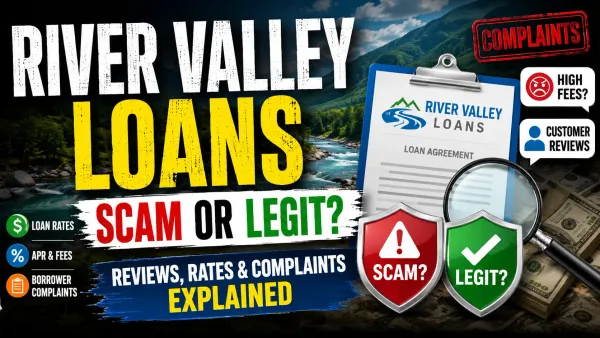
JPMorgan Chase Credit Card Membership Lawsuit: What Customers Should Know
If you've been searching for information about the JPMorgan Chase credit card membership lawsuit, you're not alone. Millions of Chase cardholders have questions — and unfortunately, a lot of the information circulating online is misleading, incomplete, or outright inaccurate about what's actually happening in court.
This guide cuts through the noise. We'll cover the real facts: what the current lawsuit alleges, what a confirmed past settlement actually paid out, who may be affected, and what steps you can take right now.
Quick summary: There is an active class action lawsuit filed against JPMorgan Chase in 2025 alleging fraudulent credit card membership charges. As of early 2026, the case is still in early litigation — it has not reached a settlement. Separately, Chase did settle a related case with the CFPB in 2013, resulting in $309 million in refunds to customers. We'll explain both.
The 2025 Class Action: Sacchi v. JPMorgan Chase
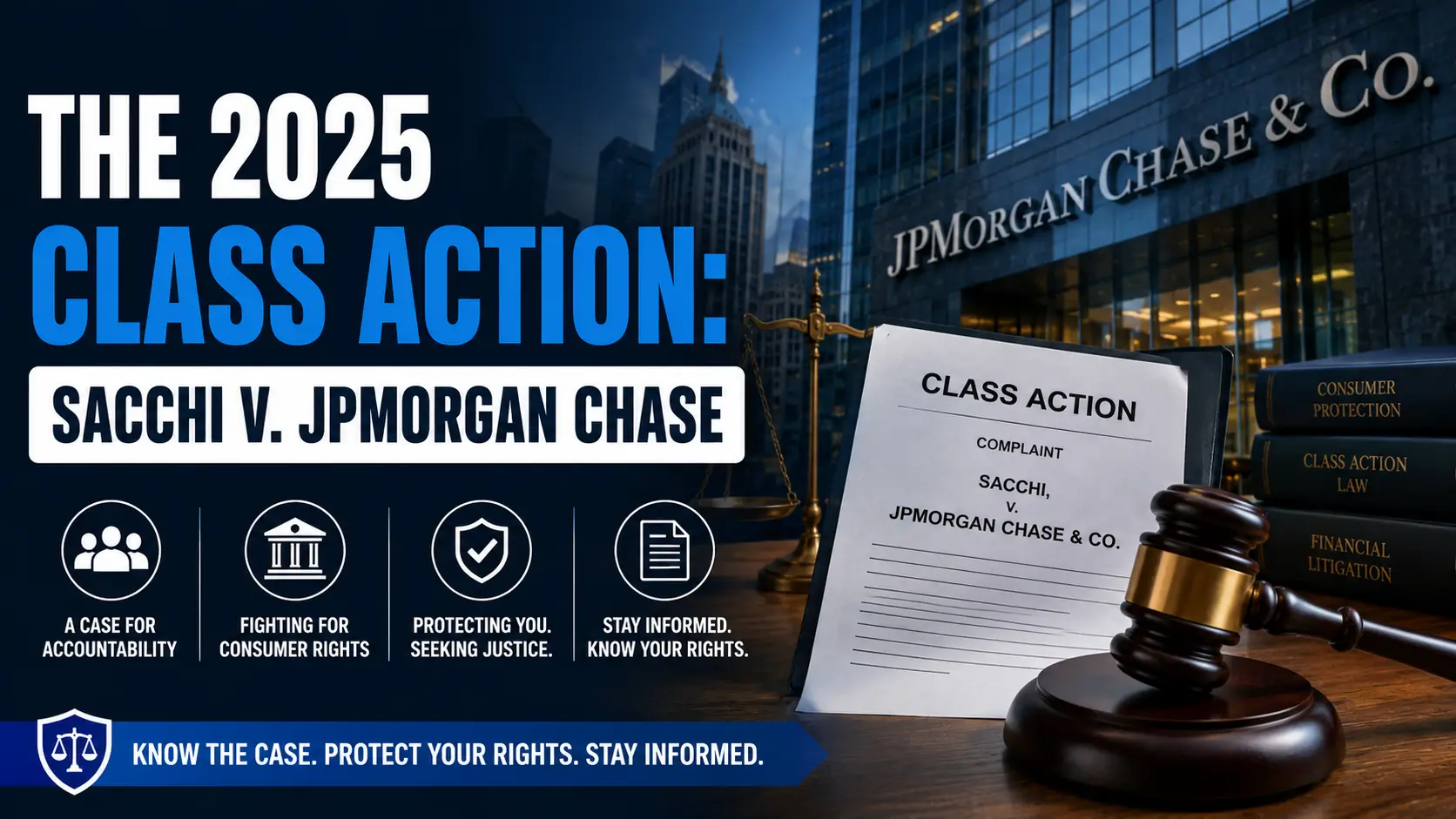
On September 15, 2025, plaintiff John Sacchi filed a class action complaint against JPMorgan Chase Bank N.A. and JPMorgan Chase & Co. in the U.S. District Court for the Southern District of New York.
Case details:
- Case name: Sacchi v. JPMorgan Chase Bank N.A., et al.
- Case number: 1:25-cv-07632
- Court: U.S. District Court, Southern District of New York
- Filed: September 15, 2025
- Status as of early 2026: Active litigation — class certification phase
This is a proposed class action, meaning it hasn't yet been certified to represent a class of plaintiffs. The court has not issued any settlement — despite what several third-party websites are claiming.
Important: Multiple SEO-driven websites are publishing false claims that a settlement has been reached with a "June 30, 2026 deadline" for claims. Court records on CourtListener (sourced from PACER) show the case's last known filing was January 23, 2026 and the case remains in early litigation stages. Do not submit personal information to unofficial sites claiming to process settlement claims for this case.
What the Lawsuit Actually Alleges
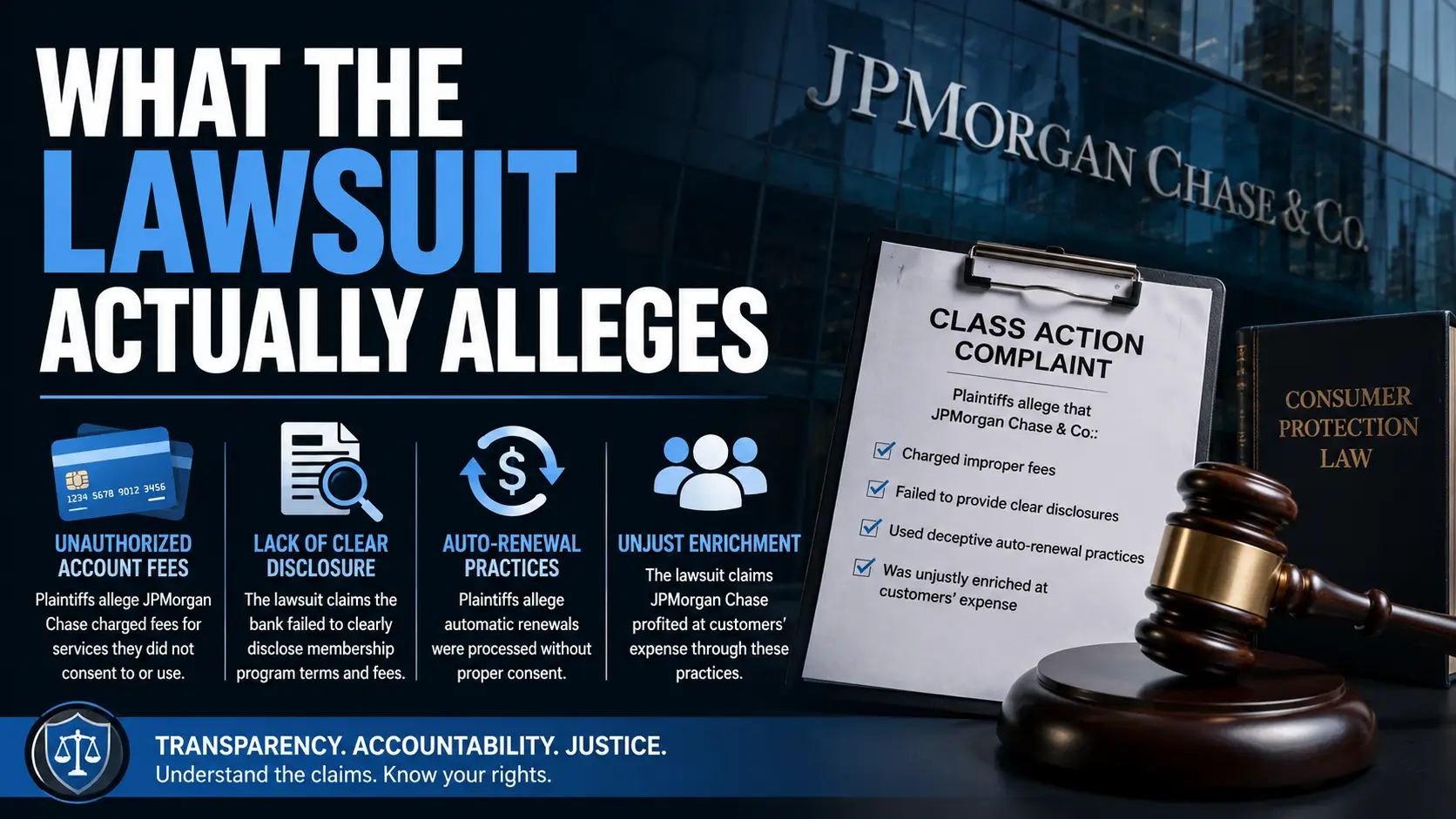
According to the complaint, JPMorgan Chase fraudulently solicited consumers to purchase credit card memberships by promising automatic statement credits for certain qualifying purchases — and then failed to deliver those credits.
Here's what the plaintiff claims happened specifically:
- Sacchi was approached by Chase in the summer of 2025 and offered a one-year credit card membership for $750.
- Chase allegedly promised automatic credits for purchases at specified restaurants and for online music streaming services.
- After Sacchi paid the membership fee and made qualifying purchases, Chase allegedly failed to apply the promised credits.
- Rather than face interest charges, late fees, and penalties, Sacchi was forced to pay the unreimbursed charges out of pocket.
The lawsuit doesn't frame this as a one-off billing error. The plaintiff alleges it's part of a systematic pattern — a deliberate strategy to induce customers to pay premium membership fees and make specific purchases, then withhold the credits that justified the fee in the first place.
The proposed class would include anyone who made charges on a JPMorgan Chase-issued credit card that were supposed to be automatically credited under the company's promises but were not.
The plaintiff is seeking class certification, damages, legal fees, and a jury trial. The plaintiff is represented by Stephen J. Simoni of Simoni Consumers Class Action Law Offices.
The 2013 CFPB Settlement: The Confirmed Payout
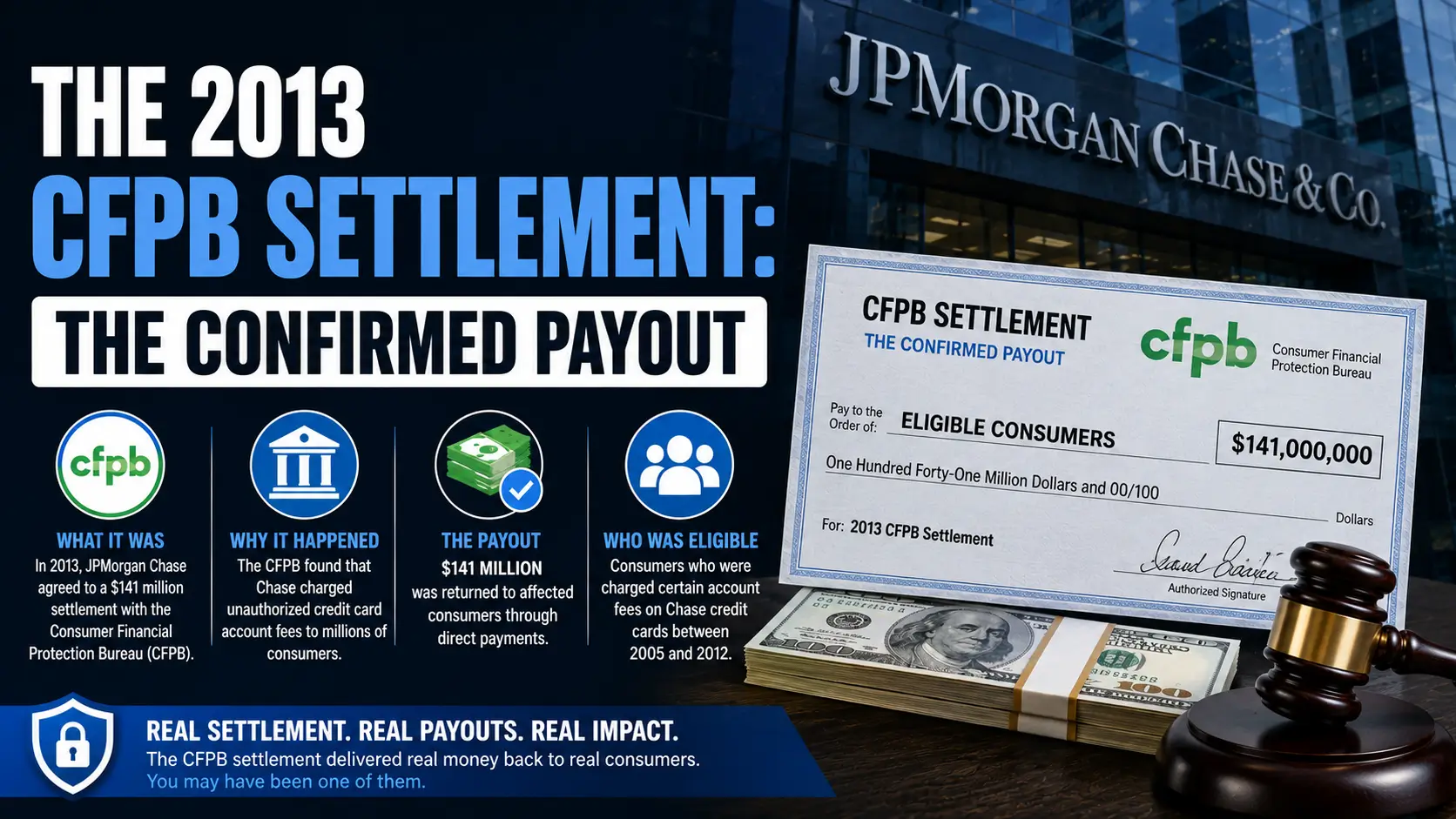
While the 2025 lawsuit is still working its way through the courts, there is a real, confirmed settlement from the past that's worth understanding — both because it shows Chase's history with these issues and because some customers are still confused about it.
In September 2013, the Consumer Financial Protection Bureau (CFPB), working alongside the Office of the Comptroller of the Currency (OCC), ordered JPMorgan Chase to refund approximately $309 million to more than 2.1 million customers for illegal credit card practices.
What triggered the 2013 action?
The agencies found that Chase had engaged in unfair billing practices tied to credit card "add-on products" — primarily identity theft protection and credit monitoring services. Customers were being billed for these services even when they weren't actually receiving them.
The violations occurred between October 2005 and June 2012. In many cases:
- Monthly fees ranged from $7.99 to $11.99
- Some customers paid for years without receiving the promised benefits
- The fees sometimes pushed customers over their credit limits, triggering additional fees
- Some customers were also charged interest on fees for services never received
What Chase was required to do
Under the consent orders from both the CFPB and OCC, Chase was required to:
- End the unfair billing practices immediately
- Refund approximately $309 million (plus interest) to affected customers
- Pay $80 million in civil penalties — $20 million to the CFPB's Civil Penalty Fund and $60 million to the OCC
- Take steps to ensure these practices wouldn't happen again
CFPB Director Richard Cordray stated at the time: "At the core of our mission is a duty to identify and root out unfair, deceptive, and abusive practices in financial markets that harm consumers."
Chase's head of operations for consumer banking acknowledged the issue and said the firm would phase out the add-on products entirely.
Did Chase admit wrongdoing?
Chase agreed to the settlement without formally admitting wrongdoing — which is standard practice in regulatory consent orders. However, the scale of the refunds (over $309 million to 2.1+ million customers) made clear that regulators viewed the practices as a serious consumer harm.
Other Chase Credit Card Settlements
The 2025 membership lawsuit and the 2013 CFPB action aren't isolated events. Chase has faced several class action settlements related to credit card practices over the years.
2012 Minimum Payment Settlement ($100 million)
A federal court in San Francisco approved a $100 million settlement on behalf of over 1 million Chase cardholders. The case centered on Chase allegedly increasing minimum monthly payments from 2% to 5% of the loan balance after promising customers a fixed rate "until the balance is paid in full." The practice essentially more than doubled customers' minimum payments overnight.
Chase Payment Protection Products Settlement ($20 million)
A class action in the Southern District of Florida (Kardonick et al. v. JPMorgan Chase & Co.) resulted in a $20 million settlement fund for Chase credit card holders enrolled in or billed for "Payment Protection Products" between September 1, 2004 and November 11, 2010. These add-on products included services like "Credit Protection Plus" and "Payment Protector" that customers alleged they never agreed to.
2015 Credit Card Debt Collection Settlement ($136 million)
Chase agreed to pay $136 million to settle federal and state probes uncovering illegal tactics used to go after delinquent credit card borrowers. The settlement covered 47 states and the District of Columbia. Chase also agreed to cease collection efforts on more than 528,000 consumers it had sued for credit card debts.
Who Might Be Affected by the Current 2026 Lawsuit
The current Sacchi v. JPMorgan Chase case has not yet been certified as a class action, which means there's no official list of class members and no settlement to claim. However, the proposed class definition is broad.
Based on the complaint, you may eventually be included in the class if you:
- Hold or have held a JPMorgan Chase-issued credit card
- Were promised automatic statement credits for qualifying purchases
- Made those qualifying purchases but did not receive the promised credits
- Were charged for a Chase credit card membership or premium card benefit package
Premium Chase cards with significant annual fees and statement credit structures — like the Chase Sapphire Reserve ($550/year), the Chase Sapphire Preferred, or any co-branded card with category credit promises — would be the most relevant products to watch here.
What to do now: If you believe you've been charged for a Chase membership or premium card annual fee and have not received promised credits, start documenting. Save your card statements. Note any marketing materials or app notifications that described the credits Chase promised.
What You Can Do Right Now
Whether or not you're affected by the 2026 lawsuit, there are practical steps you can take today.
1. Pull your Chase statements
Review the last 12–24 months of statements from any Chase credit card you hold. Look for:
- Annual fee charges or "membership fee" line items
- Statement credits that were promised but never appeared
- Charges described as "Payment Protector," "Credit Protection Plus," or similar add-on products
2. Check your card's benefits portal
Log into your Chase account and navigate to the card benefits section. Compare the credits that are listed as available against your actual statement credits received. Many Chase cardholders discover discrepancies simply by doing this review.
3. Contact Chase directly
If you identify missing credits, call the number on the back of your card. Ask specifically about any promised automatic credits that haven't posted. Document the call: note the date, time, representative name, and what you were told.
4. File a CFPB complaint if needed
If Chase doesn't resolve your concern, you can file a complaint at consumerfinance.gov/complaint. The CFPB complaint database is public, and complaints do get company responses. They also inform regulatory attention.
5. Monitor legitimate class action resources
Bookmark TopClassActions.com and ClassAction.org — these are reputable sites that track active cases and settlements. If the Sacchi case reaches a settlement, these sites will publish accurate information about how to file a claim.
6. Don't pay to join a class action
Legitimate class action attorneys work on contingency — they only get paid if the case succeeds. If any website or person asks you to pay a fee upfront to join a class action or receive a settlement, it is a scam.
How to Spot Fake Settlement Scams
The JPMorgan Chase lawsuit topic has attracted a wave of low-quality websites publishing false settlement information designed to collect your personal data or generate advertising revenue. Here's how to protect yourself.
Red flags to watch for
| Warning Sign | What It Means |
|---|---|
| Claims a settlement exists for the 2025 Sacchi case | False — court records confirm no settlement as of early 2026 |
| Asks for SSN, bank account info, or payment to file a claim | Scam — never provide this to unofficial sites |
| Lists a specific claim deadline (e.g., "June 30, 2026") for an unconfirmed settlement | Fabricated to create urgency |
| No link to an official court docket or settlement administrator | Unverified — check PACER or CourtListener |
| Domain registered recently with no legal credentials | Low-credibility source |
How to verify a real settlement
- Search the case name + "class action settlement" on ClassAction.org
- Look up the docket on CourtListener.com (free) or PACER.gov (official federal court records)
- Real settlement notices come by mail or email — but always verify by searching the official case number before submitting any information
Chase's Position
JPMorgan Chase has generally denied wrongdoing across these various legal actions. In defending the Sacchi case and related matters, Chase's legal teams have argued that:
- Customers agreed to membership terms through their card agreements
- Disclosures were clearly provided before enrollment
- Cancellation procedures were communicated and available
These are standard defenses in class action litigation. Chase has not issued a public statement about the Sacchi case specifically, and the bank has not acknowledged any systematic policy of withholding promised credits.
That said, Chase's track record — including the $309 million CFPB settlement, the $100 million minimum payment settlement, and the $136 million debt collection settlement — demonstrates a history of resolving major consumer credit card disputes when regulators or courts have found merit in the claims.
Frequently Asked Questions (FAQs)
Is there a JPMorgan Chase credit card membership settlement I can claim right now?
Not for the 2025 Sacchi lawsuit — that case is still in active litigation as of early 2026. The confirmed past settlement was the 2013 CFPB action, which required Chase to refund $309 million to 2.1 million customers. That settlement is closed. If you believe you had unresolved issues from the 2005–2012 period, contact the CFPB.
Which Chase credit cards are involved in the 2026 lawsuit?
The proposed class in Sacchi v. JPMorgan Chase would include anyone who made charges on a JPMorgan Chase-issued credit card that were supposed to be automatically credited but were not. The case specifically references a $750 annual membership with restaurant and music service credits — a structure most similar to premium cards like the Chase Sapphire Reserve.
Does filing a claim against Chase affect my credit or my Chase account?
In class action settlements, participating generally does not affect your credit or your existing accounts. Chase cannot close your accounts or change your terms because you participated in a lawsuit or settlement. That said, consult with an attorney if you have specific concerns about your situation.
How do I find out if I qualify when a settlement is reached?
If the Sacchi case reaches a settlement, you would typically receive a direct mail or email notice as a class member. You can also monitor TopClassActions.com, ClassAction.org, or set up a Google Alert for "Sacchi JPMorgan Chase settlement" to be notified immediately.
What's the difference between the CFPB action and the class action lawsuit?
The 2013 CFPB action was a regulatory enforcement matter — the government agency investigated Chase and issued a consent order requiring refunds and penalties. The 2025 Sacchi case is a private class action filed by consumers through a plaintiff's attorney. Both can result in money for affected customers, but they proceed through different channels.
Should I cancel my Chase credit card because of these lawsuits?
That's a personal financial decision. A lawsuit doesn't necessarily mean your card is a bad product — many Chase cards continue to offer strong rewards and benefits. However, if you've noticed promised credits not posting, that's worth investigating before your next annual fee hits. Compare what your card actually delivers against what Chase markets to make an informed choice.
What is "negative option marketing" and does it apply here?
Negative option marketing is when a company enrolls you in a service and keeps charging you unless you actively cancel. It's a common theme in credit card add-on product complaints. The 2013 CFPB action specifically targeted Chase's use of these practices for credit monitoring products. The 2026 lawsuit involves a slightly different mechanism — alleged non-delivery of promised credits rather than unauthorized enrollment — but both reflect consumer protection concerns around billing transparency.
Can I sue Chase individually instead of joining a class action?
Yes, you can pursue an individual claim if you believe Chase has wrongfully charged you. However, individual litigation is expensive. For small-dollar disputes, the class action mechanism is typically more practical. Consulting a consumer protection attorney can help you understand your options. Many offer free consultations for cases of this type.
The Bottom Line
The JPMorgan Chase credit card membership lawsuit is real and worth following — but it hasn't produced a settlement yet. The Sacchi v. JPMorgan Chase case is moving through federal court, and cardholders who believe they've been denied promised statement credits should document their experience and monitor the case's progress.
The confirmed history of Chase credit card settlements — including $309 million to 2.1 million customers in 2013 — shows that consumer legal pressure can produce real financial accountability. But acting on false settlement information circulating online could expose you to scams or waste your time.
Your best moves right now: review your statements, report discrepancies directly to Chase and the CFPB, and bookmark reputable class action tracking sites to stay informed as the case develops.
This article is for informational purposes only and does not constitute legal advice. If you believe you have been harmed by JPMorgan Chase's credit card practices, consult a licensed consumer protection attorney in your jurisdiction.
Pricing, case status, and settlement information is accurate as of the date of publication. Legal cases can change rapidly — always verify current case status through official court records at CourtListener.com or PACER.gov.