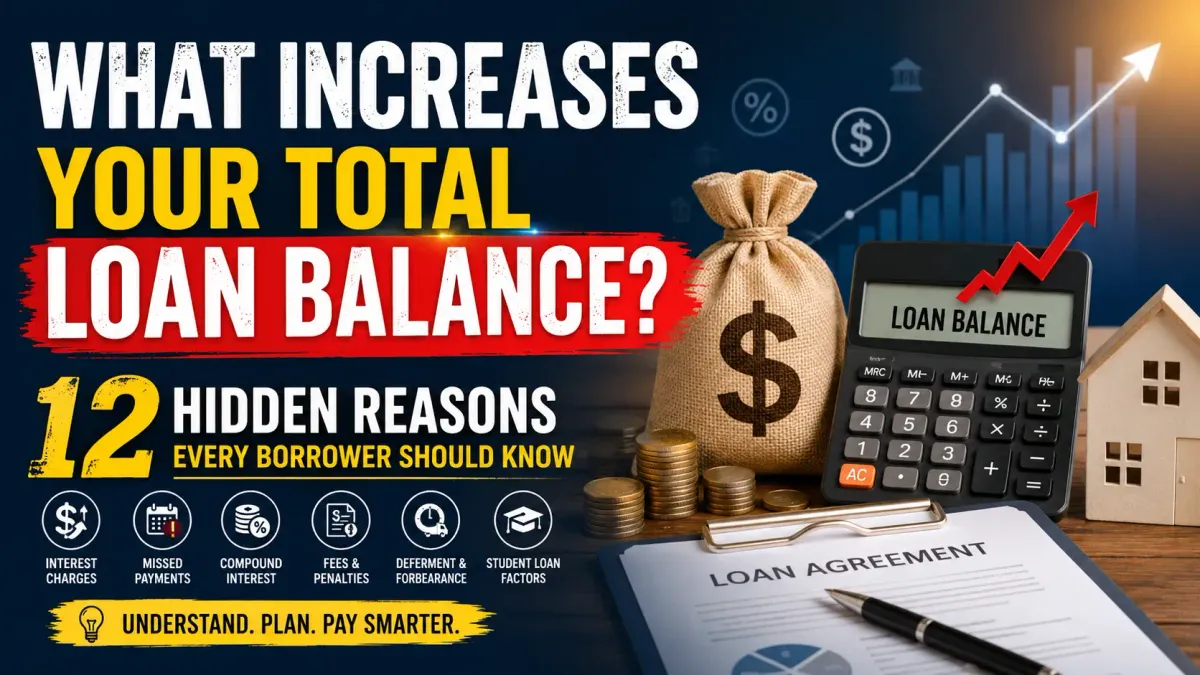
What Increases Your Total Loan Balance? 12 Hidden Reasons Every Borrower Should Know
You've been making your payments every month. So why does your loan balance look the same as it did six months ago — or worse, higher than what you originally borrowed?
It's one of the most disorienting moments in personal finance: opening a statement expecting progress and finding the opposite. The truth is, a loan balance isn't just principal minus payments. A dozen quiet mechanisms — some contractual, some accidental, some deliberately buried in fine print — can push it back up, even when you're doing everything "right."
Most guides on this topic stop at four or five factors: interest, fees, missed payments, deferment. Those are real, but they're also the easy half of the story. Below are all 12 — including the ones that catch even careful borrowers off guard, like promotional financing that quietly reverts to double-digit retroactive interest, and servicer errors that misapply your own payments.
Quick Answer
Your total loan balance can increase due to interest capitalization, negative amortization, missed or late payments, fees and penalties, deferment or forbearance, variable/adjustable interest rates, cash-out refinancing, additional borrowing, deferred-interest promotional financing, financed add-on products, loan servicing errors, and collection or default-related charges.
Interest Capitalization
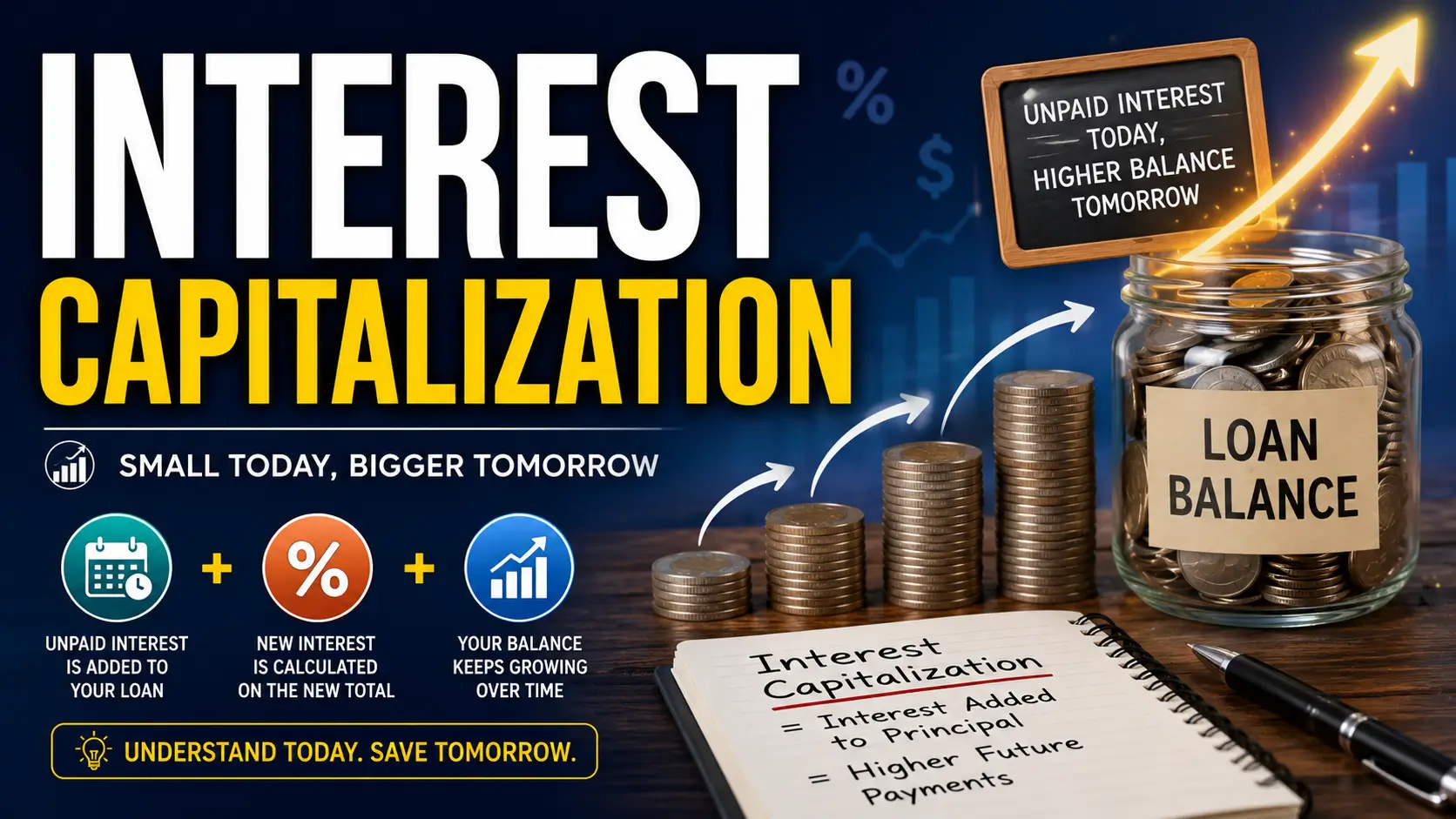
Capitalization happens when unpaid interest gets added to your principal, so you end up paying interest on interest. It's most common after a grace period, deferment, or forbearance ends — the interest that accrued during that pause doesn't disappear. It gets folded into the amount you owe, and your future interest is calculated on that new, larger number.
This is especially aggressive on federal and private student loans, where a single deferment period can add hundreds or thousands of dollars to the principal before repayment even starts.
Negative Amortization
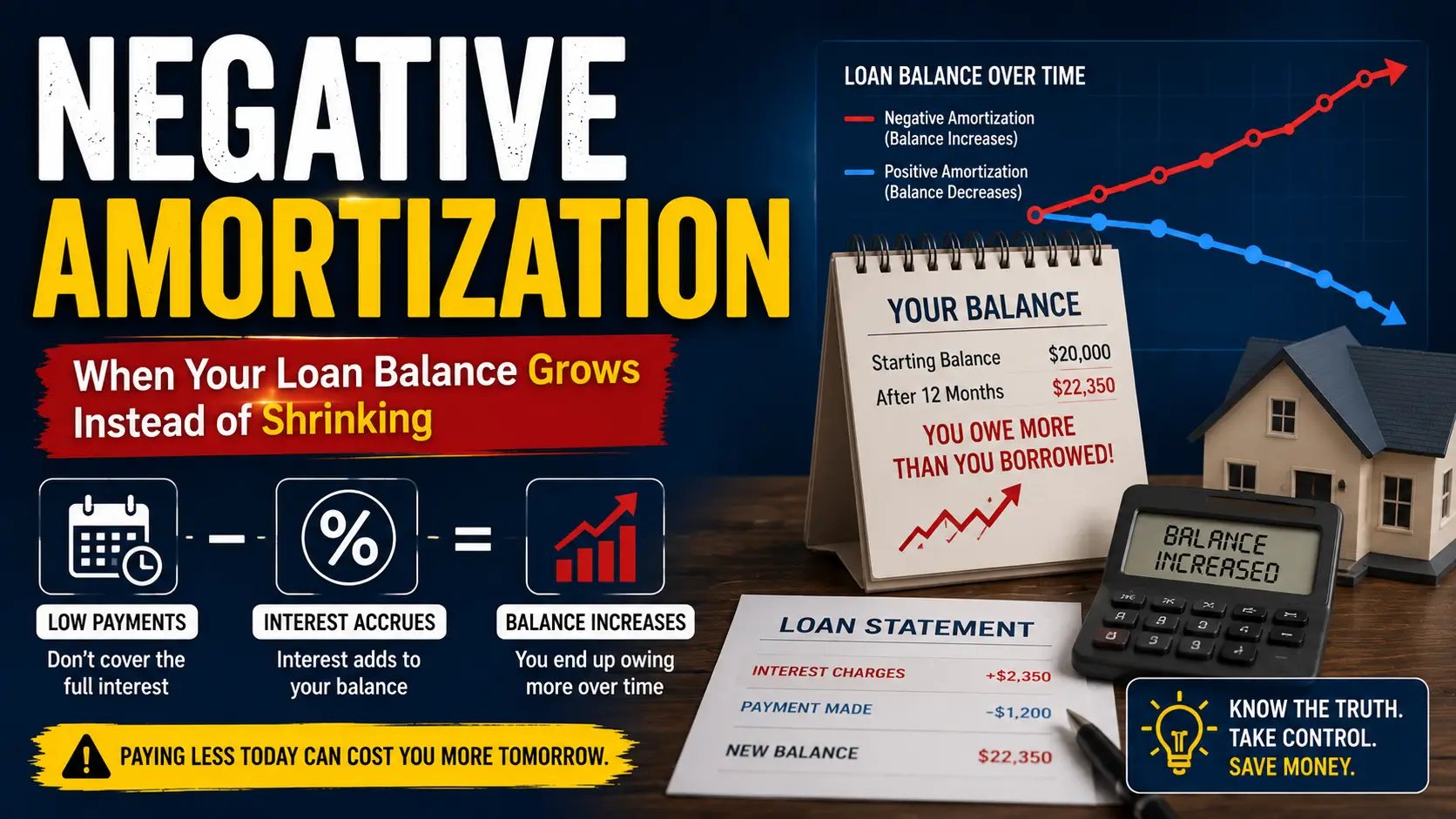
Negative amortization occurs when your monthly payment is smaller than the interest accruing that month. The shortfall doesn't vanish — it's tacked onto your balance. This shows up most often with:
- Income-driven repayment (IDR) plans for federal student loans, where payments are based on income rather than the amount owed
- Some adjustable-rate mortgages with minimum-payment options
- "Buy now, pay later" style personal loans marketed on affordability rather than payoff speed
If your statement shows a "minimum payment" that's suspiciously low relative to your rate, check whether it actually covers interest. If it doesn't, your balance is growing by design.
Missed or Partial Payments
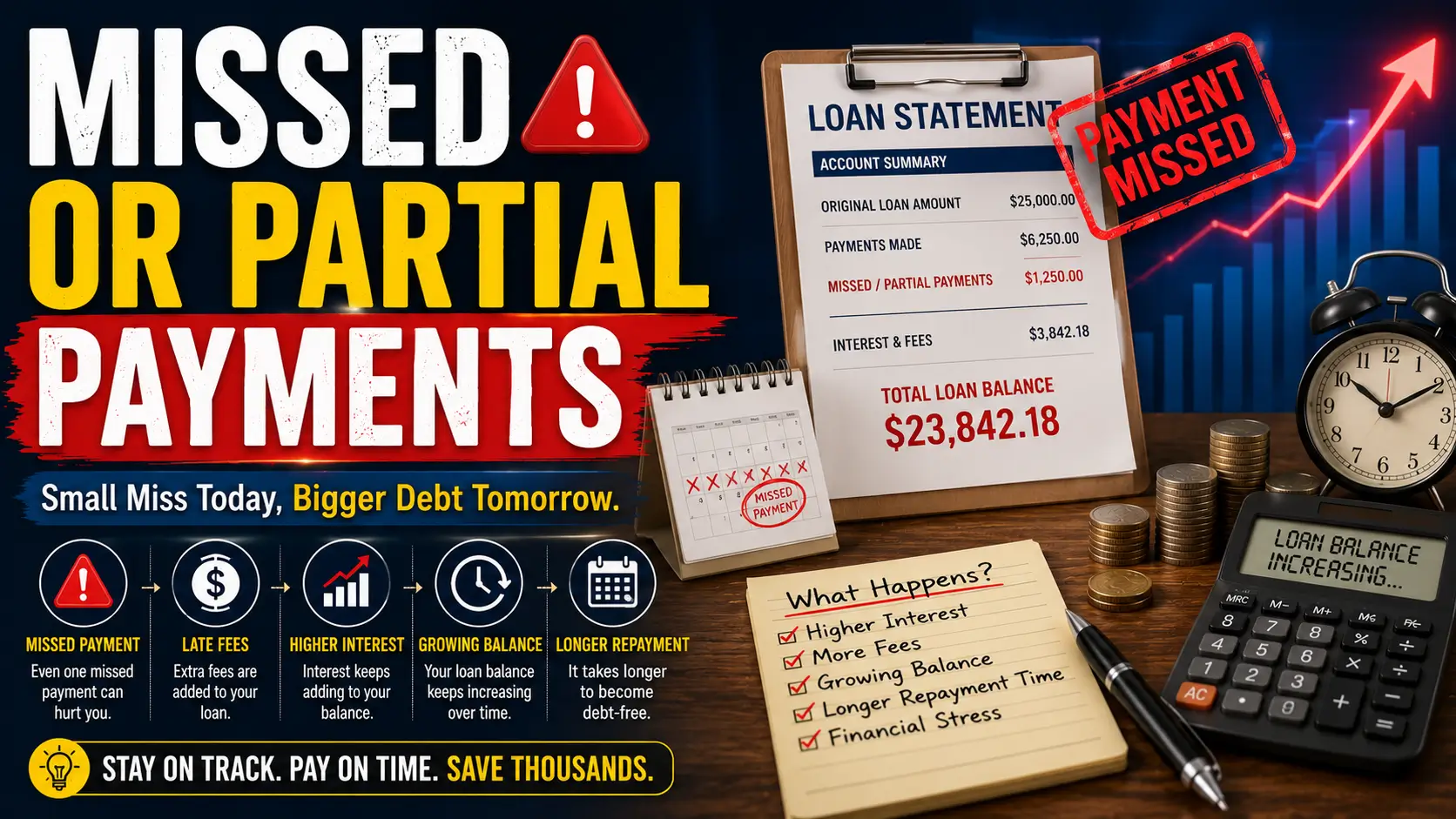
When you miss a payment entirely, the principal isn't touched, but interest keeps accruing on the full unpaid balance. Partial payments cause a milder version of the same problem: less goes toward principal, so more interest accrues the following month. Over several cycles, this compounding gap can meaningfully slow — or reverse — your progress.
Fees and Penalties
Lenders can add a range of charges directly to your balance rather than billing them separately:
- Late fees
- Loan origination fees rolled into the balance instead of paid upfront
- Returned-payment or NSF fees
- Account maintenance or servicing fees
- Prepayment penalties on certain personal, auto, or business loans
Your APR, not just your interest rate, is the number that reflects these costs — it's worth comparing APR across lenders precisely because it captures fees the sticker interest rate hides.
Deferment and Forbearance
Pausing payments through deferment or forbearance protects your credit in the short term, but interest usually keeps accruing unless the loan is explicitly subsidized. When the pause ends, that accrued interest often capitalizes (see #1), meaning the relief comes with a delayed cost.
Variable and Adjustable Interest Rates
Loans tied to a variable or adjustable rate — many private student loans, HELOCs, and adjustable-rate mortgages — reset periodically based on an index. When that index rises, your rate rises with it, and a larger share of each payment goes to interest instead of principal. In a rising-rate environment, this alone can stall balance reduction even with on-time payments.
Cash-Out Refinancing or Consolidation
Refinancing can lower your rate or extend your term, but a cash-out refinance — common with mortgages and increasingly with auto loans — adds new borrowed funds directly to your balance. Debt consolidation loans can have a similar effect if new charges accumulate on paid-off credit cards after consolidation, effectively duplicating the debt.
Additional Draws on Open-End Credit
HELOCs, credit cards, and other revolving lines let you borrow again as you repay. Every draw increases your balance immediately, independent of your payment history. Borrowers sometimes lose track of this because a HELOC "payment" can coexist with fresh draws in the same statement cycle.
Deferred-Interest Promotional Financing (the one most guides skip)
This is the reason your balance can jump from $0 in remaining interest to a full retroactive interest charge overnight. Store cards, medical and dental financing (like CareCredit-style plans), and furniture or electronics financing often advertise "0% interest if paid in full within 12/18/24 months." That's deferred interest, not waived interest.
If even a few dollars remain unpaid on the day the promotional period ends, many issuers charge interest retroactively on the entire original purchase amount, from day one, at a rate that's often 25–30% APR. Your balance can spike by hundreds of dollars in a single billing cycle with no missed payment involved — just a miscalculated payoff date.
Financed Add-On Products
Auto loans in particular are frequently bundled with extended warranties, GAP insurance, credit life insurance, or paint/fabric protection — all financed into the loan principal rather than paid separately. These add-ons increase your total loan balance from day one and accrue interest for the life of the loan, even though they're not part of the vehicle price you negotiated.
Before signing, ask for an itemized breakdown of the "amount financed" line on your contract — it should separate the vehicle price from any add-ons.
Loan Servicing Errors and Misapplied Payments
Loan servicers occasionally misapply payments — crediting an extra payment to "next month's due date" instead of principal, for example, which stops it from actually reducing your balance the way you intended. Servicing transfers (when your loan is sold or reassigned to a new company) are a common trigger for these errors. If your balance doesn't move the way your payment history suggests it should, request a full payment history and amortization schedule from your servicer.
Default, Collections, and Legal Costs
If a loan goes to collections or default, the balance can grow well beyond the original terms. Collection agencies and some loan agreements allow for the addition of collection costs, legal fees, and continued interest accrual even after the original payment schedule has broken down. This is the most severe version of balance growth and one of the hardest to reverse without negotiation or legal help.
How to Check What's Driving Your Balance Up
- Pull your most recent amortization schedule or payment history from your lender or servicer
- Compare your actual balance to what the schedule predicted for this point in time
- Identify the gap: is it capitalized interest, a fee, a missed payment, or a servicing error?
- If you can't explain the gap from your own statements, request a full accounting in writing — this creates a paper trail if you need to dispute an error
Frequently Asked Questions (FAQs)
Can my loan balance go up even if I never miss a payment?
Yes. Variable rate increases, interest capitalization after a deferment, negative amortization on income-driven repayment plans, and deferred-interest promotions can all raise your balance without a single missed payment.
Is it normal for a loan balance to increase at the start of repayment?
On some amortization schedules, especially longer-term loans, a larger share of early payments goes to interest rather than principal, so the balance decreases slowly rather than increasing — but if it's rising rather than slowing, that points to one of the factors above rather than normal amortization.
What's the difference between capitalized interest and negative amortization?
Capitalized interest is unpaid interest added to your principal, typically after a pause in payments. Negative amortization is an ongoing pattern where your regular payment itself doesn't cover the interest accruing that period, so the shortfall is added each cycle.
Does refinancing always increase my loan balance?
No — a standard rate-and-term refinance keeps the balance roughly the same (minus any fees rolled in). Only a cash-out refinance, where you borrow additional funds, directly increases the balance.
Have you dealt with a surprise balance increase — a deferred-interest promotion, a servicing error, or something else? Share your experience or questions in the comments below.