What Is the Fizz Credit Card? Complete Beginner's Guide
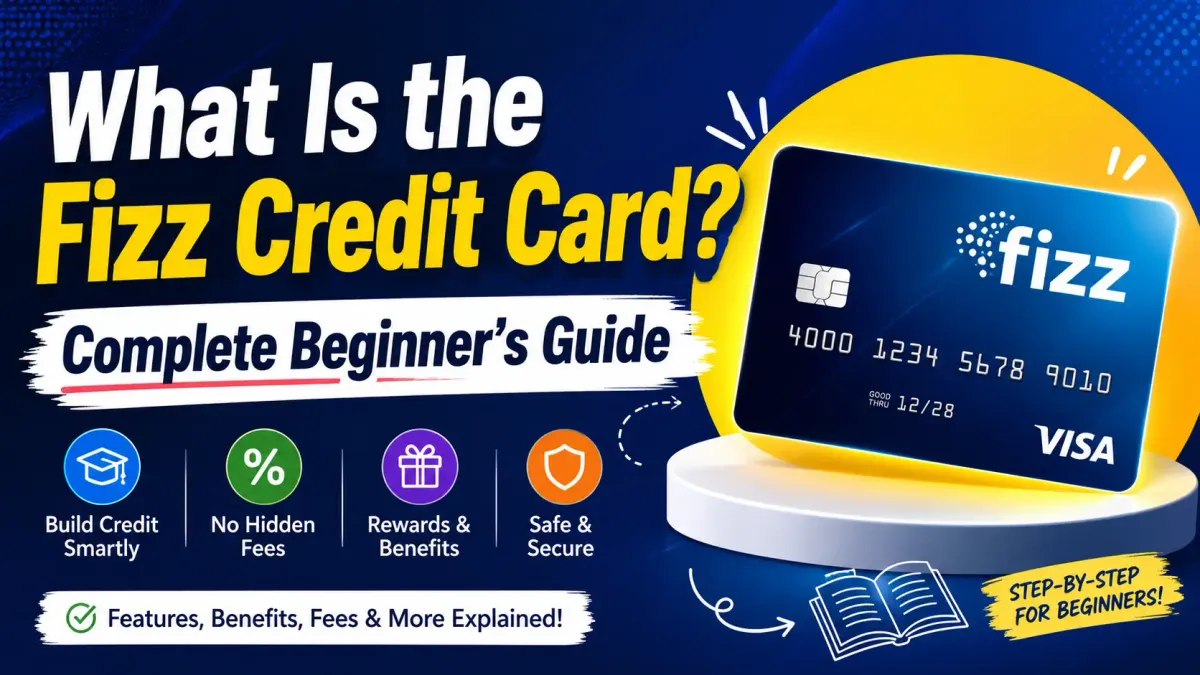
If you've been searching for a way to build credit without the risk of falling into debt, you may have come across the Fizz Credit Card. It promises the best of both worlds: the spending habits of a debit card combined with the credit-building power of a credit card. But what exactly is the Fizz card, how does it work, and is it worth it in 2026?
This guide covers everything a beginner needs to know — from how the card functions to its fees, rewards, pros, cons, and who it's best suited for.
Quick Update (2026): Fizz rebranded to Mine in January 2026. The product works the same way, but you'll now find it at usemine.com. All references to "Fizz" in this guide apply equally to the current Mine card.
What Is the Fizz Credit Card?
The Fizz Card (now rebranded as the Mine Card) is a unique financial product that functions like a debit card but is designed to help you build a credit history. It was founded in 2021 by Carlo Kobe and Scott Smith — two college dropouts from Harvard and Cornell who wanted to create a safer, smarter way for young adults to establish credit without the traps of traditional credit cards.
The company went through Y Combinator's Summer 2021 cohort and later raised $14.4 million in seed funding led by Kleiner Perkins, with participation from SV Angel, Y Combinator, New Era Ventures, and founders from unicorns including Handshake and Postmates. In January 2026, Fizz officially rebranded to Mine, expanding its offerings into a broader personal finance app.
At its core, the Fizz/Mine card is a revolving, unsecured line of credit — just like a traditional credit card — but with one critical twist: your spending limit is tied directly to your linked bank account balance. You can only spend what you already have. This eliminates interest charges and the risk of carrying a balance you can't pay off.
Is the Fizz Card a Debit Card or a Credit Card?
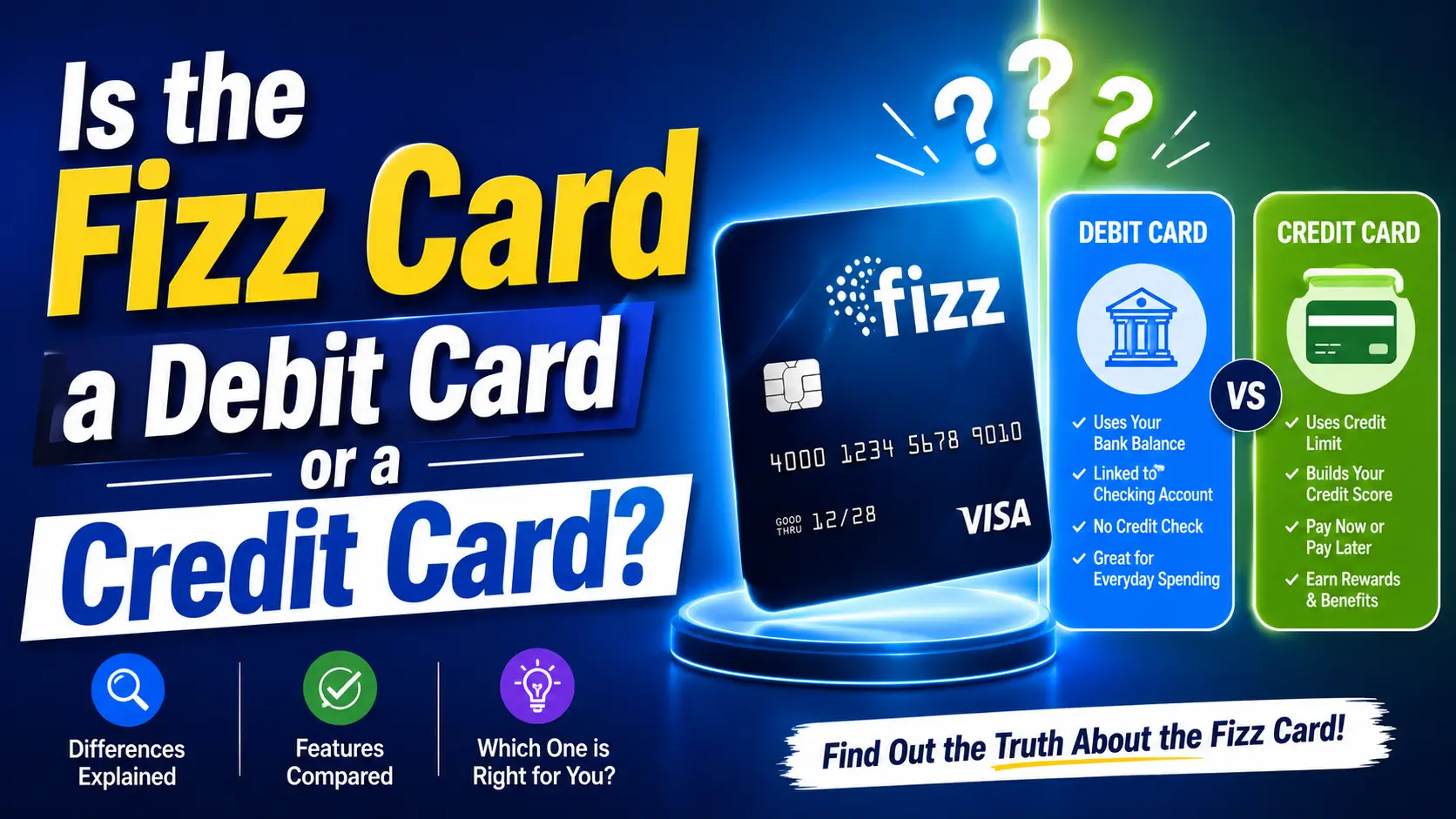
This is where most people get confused, and understandably so.
The Fizz card is technically a line of credit (specifically, a revolving unsecured credit line issued through Lead Bank or Patriot Bank), but it behaves like a debit card from a user perspective. Here's why:
| Feature | Traditional Credit Card | Debit Card | Fizz Card |
|---|---|---|---|
| Spending limit | Based on credit score | Bank balance | Bank balance |
| Charges interest | Yes | No | No |
| Requires credit check | Yes | No | No |
| Reports to credit bureaus | Yes | No | Yes |
| Risk of debt | High | None | Very low |
The key takeaway: Fizz has the credit-building benefits of a credit card without the financial risks. It's issued as a Visa debit card but classified as a credit product under the hood, which is why it can report to the credit bureaus.
How Does the Fizz Card Work?
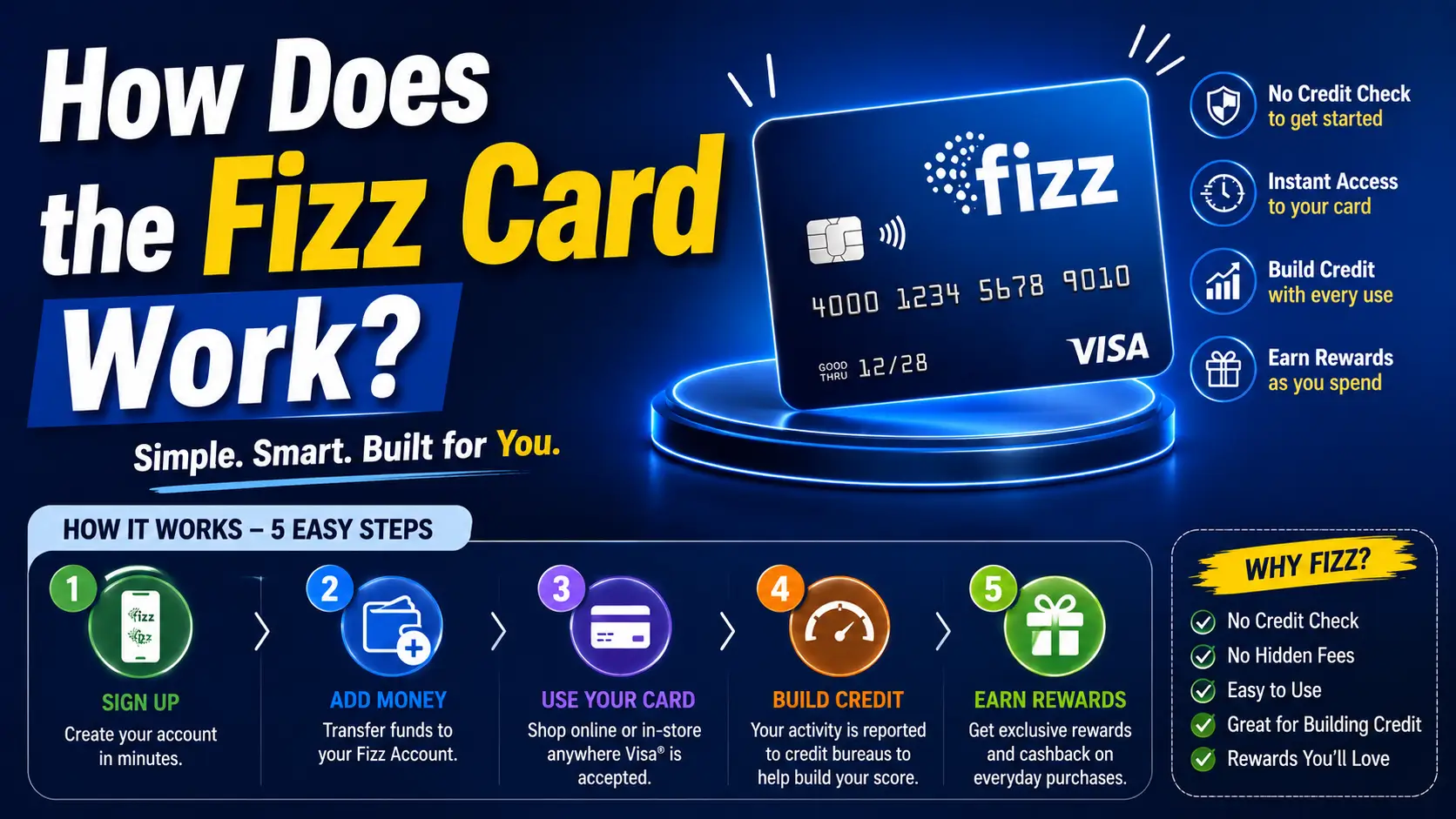
Here's the step-by-step flow of how the Fizz card operates:
1. Link Your Bank Account When you sign up, you connect your existing checking or savings account. Fizz reads your balance and sets your spending limit based on what you have available.
2. Use the Card Like a Debit Card Swipe, tap, or use the virtual card for everyday purchases — groceries, food delivery, subscriptions, clothes, whatever you'd normally buy. You can also use it with Apple Pay from the day you sign up, and a physical card arrives within about two weeks.
3. Daily Autopay (Recommended) Fizz encourages you to enable Daily Autopay, which automatically pays off your purchases each day from your linked bank account. This keeps your balance near zero at all times and reflects well on your payment history.
4. Monthly Payment (If Not Using Daily Autopay) If you prefer, payment is due at the end of each month — just like a traditional credit card.
5. Credit Bureaus Get Notified Your payment activity is reported to Experian and TransUnion (as of late 2025, Fizz/Mine no longer reports to Equifax). This builds a positive payment history over time, which is the most important factor in your credit score.
6. SafeFreeze Protects You If you miss a daily payment, if autopay fails, or if your bank balance drops too low, the SafeFreeze feature automatically locks your card. This prevents overspending and stops potential late payment marks on your credit report.
Fizz Card Features at a Glance
| Feature | Details |
|---|---|
| Card type | Debit card / revolving line of credit |
| Credit check required | No |
| Security deposit | No |
| Interest rate | 0% (no interest charged) |
| Annual fee | $59.99/year (students), $129.99/year (non-students) |
| Credit bureaus reported | Experian, TransUnion (not Equifax as of Sept 2025) |
| Rewards | 3% cash back in a category of your choice |
| Daily Autopay | Yes (recommended) |
| SafeFreeze | Yes (optional but recommended) |
| Mobile app | iOS and Android (formerly Fizz, now Mine) |
| Issued by | Lead Bank / Patriot Bank (FDIC-insured banks) |
| Spending limit | Based on linked bank account balance |
Fizz Card Fees
The Fizz card has no interest charges and no hidden fees, but it does require a membership fee to access the card and rewards:
| Plan | Annual Cost | Monthly Equivalent |
|---|---|---|
| Student | $59.99/year | ~$5.00/month |
| Non-student | $129.99/year | ~$10.83/month |
You can also pay quarterly or monthly if preferred. A few important notes:
- No security deposit required — unlike secured credit cards
- No late fees — the SafeFreeze feature kicks in instead
- No foreign transaction fees mentioned (verify at application)
- If you cancel your membership, you lose access to the card — and closing a line of credit can temporarily impact your credit score
For students, $59.99/year works out to about $5/month. Whether that's worth it depends on how much value you extract from the rewards program and how much you value the credit-building feature.
Rewards Program Explained
The Fizz card's rewards program is one of its standout features, especially compared to most secured or credit-builder cards that offer nothing:
How You Earn:
- Earn 3% cash back in a spending category of your choice — categories can be changed once per week
- Browse offers in the Fizz/Mine app and earn bonus cash back at participating merchants
- Occasional flash promotions offer up to 100% cash back at select merchants (typically announced on Fridays)
How Rewards Work:
- Rewards are points-based: 1 point = $0.01 (1 cent)
- Points can be redeemed for cash, deposited directly into your linked bank account
- No enrollment or opt-in required — every cardholder is automatically eligible
Real Value? Fizz claims their card can deliver over $300 in annual value based on cash back available — assuming you take advantage of roughly half the available promotions. Actual results will vary based on your spending habits and how often you use app-based offers.
How the Fizz Card Builds Credit
The credit-building mechanism is straightforward:
- You make purchases on the card
- Fizz reports your payment activity to Experian and TransUnion each month
- On-time payments build a positive payment history — the single largest factor (35%) in your FICO credit score
- Over time, your credit score improves and your credit file thickens
Because the card is structured as a revolving line of credit (not just a debit card), the credit bureaus treat it like a real credit account. This means you're building:
- Payment history (most important factor)
- Credit mix (having a revolving account)
- Length of credit history (the longer you keep it open, the better)
One important caveat: As of September 2025, Mine/Fizz only reports to two of the three major bureaus — Experian and TransUnion. It no longer reports to Equifax. If a future lender pulls your Equifax report, your Fizz payment history won't be visible to them. This is a legitimate drawback compared to cards that report to all three bureaus.
Who Is the Fizz Card For?
The Fizz card is best suited for:
- College students (ages 18–24) who are new to credit and want a safe starting point
- Recent graduates who want to build credit without the temptation of overspending
- Anyone with no credit history who doesn't qualify for a regular credit card
- People who've been denied credit cards and need an alternative that doesn't require a credit check
- International students who struggle to access traditional U.S. credit products (this was actually one of the co-founder's motivations when building Fizz)
The card is not ideal for:
- People who need a credit line higher than their bank balance (e.g., for emergency expenses)
- People who want to report to all three credit bureaus
- People who prefer a free credit-building option (there are alternatives like the Chime Credit Builder with no annual fee)
- Anyone looking to maximize travel rewards or premium perks
Fizz Card Pros and Cons
✅ Pros
- No credit check required — accessible to anyone regardless of credit history
- No interest charges — you can't rack up a debt you can't pay
- No security deposit — unlike most secured credit cards
- Builds real credit — reports to two major credit bureaus
- Daily Autopay — automates payments and reduces late payment risk
- SafeFreeze — automatic protection against overspending
- Cash back rewards — unusual for a credit-builder product
- Apple Pay compatible from day one
- Backed by reputable investors (Y Combinator, Kleiner Perkins)
❌ Cons
- Annual fee required — $59.99 for students, $129.99 for non-students
- Doesn't report to Equifax (as of September 2025)
- Spending limited to bank balance — no access to funds beyond what you have
- Not a replacement for a traditional credit card in emergencies
- No physical bank branches
- Rebranding confusion — many people still search for "Fizz" but it's now "Mine"
- Canceling the card can hurt your credit score (closing a credit line)
Fizz Card vs. Alternatives
| Card | Annual Fee | Credit Check | Reports to Bureaus | Interest | Security Deposit |
|---|---|---|---|---|---|
| Fizz / Mine | $59.99 (student) | No | Experian, TransUnion | 0% | No |
| Chime Credit Builder | $0 | No | All 3 bureaus | 0% | No |
| Discover it® Secured | $0 | Yes (soft) | All 3 bureaus | ~28% APR | Yes (min. $200) |
| Capital One Savor Student | $0 | Yes | All 3 bureaus | ~29% APR | No |
| Self Credit Builder | Varies | No | All 3 bureaus | Yes | No (loan model) |
Key takeaway: Chime Credit Builder is the strongest free alternative if you want to avoid the annual fee. The Capital One Savor Student card offers better rewards (3% on dining, entertainment, streaming, and groceries) with no annual fee — but requires a credit check and has interest charges if you carry a balance. Fizz/Mine sits in the middle: more accessible than student credit cards, more structured than a basic savings approach.
How to Apply for the Fizz Card
As of 2026, the Fizz card is now the Mine Card. Here's how to apply:
- Download the Mine app (iOS or Android — search "Mine formerly Fizz")
- Enter your personal information (name, address, date of birth, SSN for identity verification)
- Link your bank account (used to determine your spending limit)
- Pay the membership fee to activate your card
- Apply for the Mine Card within the app (membership doesn't guarantee approval — eligibility restrictions apply)
- Get your virtual card immediately — use it with Apple Pay right away
- Receive your physical card within approximately two weeks
No credit check is run during this process. Approval is based on your bank account connection, not your credit score.
Frequently Asked Questions (FAQs)
Is the Fizz card a real credit card?
Not exactly. It's technically a revolving line of credit issued by Lead Bank, but it functions like a debit card. It does report to credit bureaus, which is the key credit-building feature.
Does the Fizz card affect your credit score?
Yes — positively. Your payment history is reported to Experian and TransUnion monthly, which can improve your credit score over time. However, if you cancel the card, closing the credit line could temporarily lower your score.
What happened to the Fizz card?
Fizz rebranded to Mine in January 2026. The product and core features remain the same, but it's now part of a broader financial app that includes budgeting tools, MoneyGPT, and financial education courses.
Do you need to be a college student to get a Fizz/Mine card?
No. While it was originally designed for college students, the card is available to non-students too — though the annual fee is higher ($129.99 vs. $59.99 for students).
Does the Fizz card report to all 3 credit bureaus?
As of September 2025, Mine/Fizz reports to Experian and TransUnion only — it stopped reporting to Equifax. This is worth knowing if a future lender uses Equifax to evaluate your application.
Is the Fizz/Mine card safe?
Yes. The card is issued through Lead Bank and Patriot Bank, both FDIC-insured institutions. Fizz also uses end-to-end encryption for your bank account connection. The SafeFreeze feature adds another layer of protection against overspending.
Can the Fizz card go negative?
No. Your spending limit is tied to your bank account balance, so you can't spend more than you have.
Is the Fizz card worth the annual fee?
For students with no credit history and limited options, the $59.99/year fee can be worth it — especially given the cash back rewards. That said, free alternatives like the Chime Credit Builder also report to credit bureaus (all three!) without any fee, so it's worth comparing.
Final Verdict
The Fizz Credit Card (now Mine) fills a real gap in the market: a credit-building product that removes the two biggest risks of traditional credit cards — debt accumulation and interest charges — while still giving you a legitimate credit history.
It's not perfect. The annual fee is a real cost, it no longer reports to all three bureaus, and your spending is capped by your bank balance. But for a college student or young adult who wants a low-risk entry point into credit-building, it's a solid option — especially if you take full advantage of the rewards program to offset the membership cost.
If you're comparing it to free alternatives like Chime Credit Builder, the decision comes down to whether the structured daily autopay system, the rewards program, and the app ecosystem are worth $60/year to you.
This article is for informational purposes only and does not constitute financial advice. Credit card terms, fees, and features may change. Always verify current terms directly with the card issuer before applying.